


You’re planning a multilingual event. The question is no longer if you need interpretation, but how you’ll provide it. Ten years ago, the answer was simple: you’d hire a team of human interpreters and rent thousands of dollars worth of audio equipment.
Today, you have options.
The big debate is AI interpretation vs human interpretation. One promises incredible cost savings and scale. The other offers nuance and unmatched quality. But which one is the right choice for your specific conference, webinar, or corporate meeting?
It's a decision with big consequences for your budget, your attendee experience, and your peace of mind on event day.
And honestly, the answer isn't a simple "one is better than the other." The best choice depends entirely on the context. Let’s break it down so you can make the right call.
What Is AI Interpretation?
AI interpretation is technology that uses artificial intelligence to translate spoken language from one language into another in real time. Think of it like a super-powered version of Google Translate, but for live speech.
Here’s the simple version of how it works:
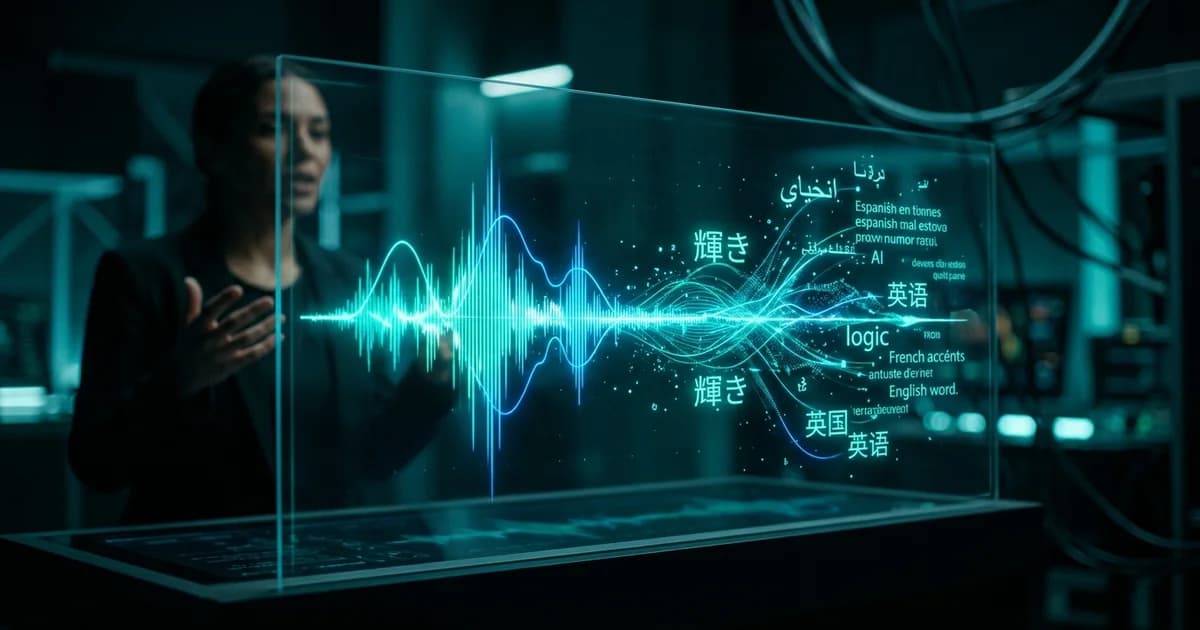
- Speech-to-Text: The AI listens to the speaker and converts their words into text.
- Machine Translation: A translation engine instantly translates that text into the target language(s).
- Text-to-Speech: The AI then generates synthesized audio of the translation, which attendees can listen to.
The whole process happens in just a few seconds. The biggest appeal is its efficiency and scale. Instead of needing two human interpreters for every language, a single AI platform can deliver audio and captions in dozens of languages at once. This is what makes it so much more affordable and easier to manage.
What Is Human Interpretation?
Human interpretation involves a professionally trained linguist listening to a speaker and orally translating their message into another language. They don't just swap words; they convey meaning, tone, cultural nuance, and intent. It’s a skill that takes years to master.
In the context of events, this usually happens in two ways:
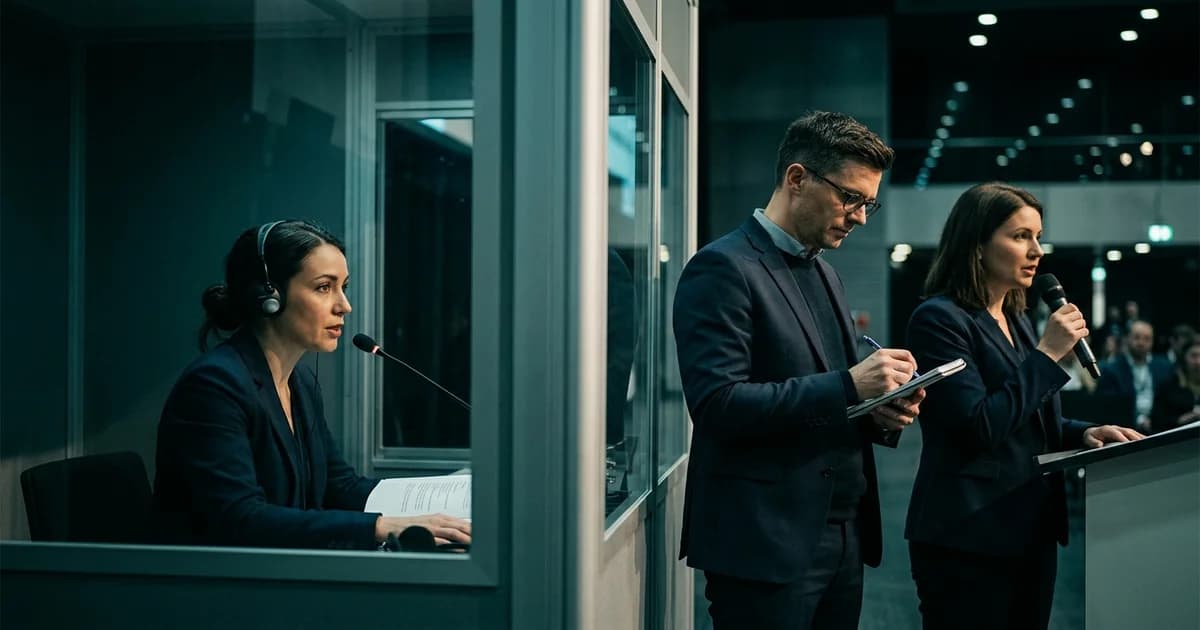
- Traditional Booths: The classic setup you see at the UN. Interpreters sit in soundproof booths at the back of the room, and attendees use special headsets to hear them. This requires a lot of hardware and a dedicated AV team.
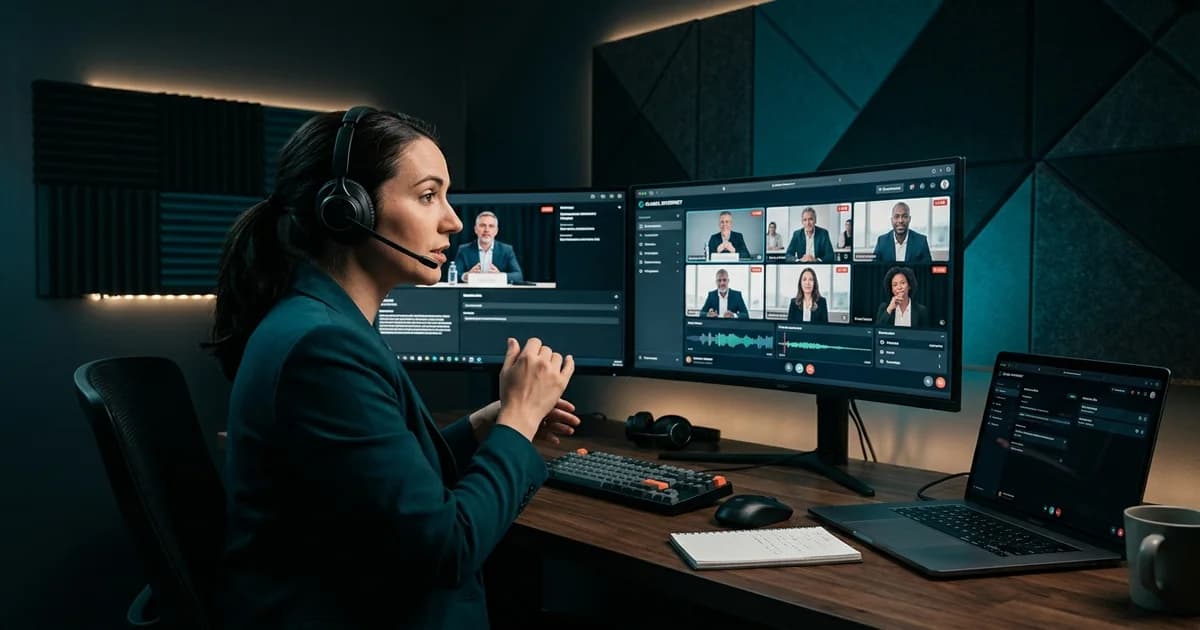
- Remote Simultaneous Interpretation (RSI): This is the modern approach. Interpreters can be anywhere in the world, working from their professional home studios. They watch a live feed of the event and their interpretation is streamed directly to attendees' smartphones or laptops through a platform.
Human interpreters are the gold standard for high-stakes situations where every word matters—think diplomatic negotiations, or sensitive medical consultations.
AI vs Human: Side-by-Side Comparison Table
Sometimes a simple chart makes it all clear. Here’s a quick breakdown of how the two stack up.
| Feature | AI Interpretation | Human Interpretation |
|---|---|---|
| Nuance & Context | Struggles with idioms, humor, sarcasm, and cultural context. | Excellent. Can adapt to tone and convey emotional intent. |
| Cost | Significantly lower. Priced per hour/event, not per language. | High. Daily rates per interpreter, per language pair ($500-$1500+ each). |
| Setup Speed | Very fast. Often under 30 minutes with no extra hardware. | Slow. Traditional booths can take 4-8 hours. RSI is faster but still requires coordination. |
| Scalability | Excellent. Can support 20, 50, or more languages simultaneously. | Limited. Requires hiring two interpreters for every language needed. |
| Consistency | Highly consistent. No fatigue. | Performance can vary. Interpreters work in pairs, swapping every 20-30 mins. |
| Attendee Access | Simple. Usually a QR code or link to access on their own phone. | Can be complex. Often requires renting and distributing special hardware receivers. |
| Technical Jargon | Very good, especially with a custom glossary to learn terms beforehand. | Depends entirely on the interpreter's preparation and expertise. |
| Live Captions | Included by default. Great for accessibility. | Not typically included. Requires a separate CART service. |
When to Use AI-Only Interpretation
AI interpretation isn’t for every situation, but it has opened up language access for events that previously couldn't afford it. It's the perfect fit when speed, scale, and budget are your top priorities.
Perfect for Internal Meetings and Budget-Conscious Webinars
Think about your internal all-hands meetings, training sessions, or large-scale webinars. The goal is to make sure everyone gets the main message, but a slight mistranslation of an idiom isn't a crisis. In these "low-risk" scenarios, AI is a fantastic tool.
It allows you to offer 10 languages for a fraction of the cost of hiring one pair of human interpreters. And since it includes live subtitles, you're also making the event instantly more accessible for everyone, which helps with compliance for regulations like the European Accessibility Act (EAA).
When to Use Human-Only Interpretation
There are times when you absolutely cannot compromise on quality. You need the empathy, judgment, and cultural awareness that only a human can provide.
This is essential for:
- High-Stakes Negotiations: A merger, a major sales deal, or a sensitive diplomatic talk.
- Legal and Medical Content: Depositions, court proceedings, or patient consultations where precision is critical for safety and compliance.
- Highly Interactive Sessions: A dynamic roundtable or a VIP Q&A where dialogue is fast, unscripted, and overlapping. Humans are much better at managing this kind of conversation.
For these events, the high cost is a necessary investment in accuracy and risk management. You’re not just paying for translation; you’re paying for an expert's judgment.
Why Hybrid (AI + Human) Is the Best of Both Worlds
You don't always have to choose. The market is rapidly moving toward a hybrid model that combines the strengths of both AI and human interpreters, often on the same platform.
This is the future of event interpretation.
Imagine your annual conference.
- For the main stage keynotes and presentations (one-to-many), you can use AI. It’s cost-effective, provides captions, and covers all your languages easily.
- For the sensitive C-suite breakout session or the high-value client negotiation, you switch to professional human interpreters for that guaranteed quality.
This is exactly how InterpretWise is designed. Our platform lets you choose the right tool for the job. You can run AI-powered interpretation for your main sessions and have a team of world-class human interpreters ready for the moments that require a human touch.
You get the scale and savings of AI without sacrificing the quality you need for your most important conversations. It all runs through the same simple interface for attendees—no confusing hardware, no separate apps. Just scan a QR code and choose your language.
Ready to see how it works? You can Try AI Interpretation Free and experience the simplicity for yourself.
A hybrid approach gives you the ultimate flexibility. It allows you to expand language access across your entire event without breaking the bank, while still having human experts on call for the sessions that demand it. It’s the smartest way to manage your budget and deliver an inclusive experience for everyone.
Want to see how a hybrid setup could work for your next event? Try AI Interpretation Free.
Frequently Asked Questions
LT: What is the real cost of a human interpreter for an event?
Human interpreters typically charge a day rate, which can range from $500 to over $1,500 per interpreter, depending on the language and subject matter. Since they must work in pairs for simultaneous interpretation, you need to budget for two interpreters per language, plus potential costs for travel, accommodation, and hardware rental.
LT: How accurate is AI simultaneous interpretation in 2026?
The accuracy of AI has improved dramatically. For clear, structured speech and common business topics, it's very effective and often comparable to human performance for conveying core information. However, it can still struggle with strong accents, fast-paced dialogue, and cultural idioms where humans excel.
LT: Can AI interpretation handle technical jargon or specific accents?
Yes, to an extent. Many AI platforms, including InterpretWise, allow you to upload a custom glossary before your event. This trains the AI to recognize and correctly translate specific brand names, acronyms, and technical terms, significantly improving accuracy. It can still be challenged by very heavy or unexpected accents, however.
LT: Does Zoom or Teams have good built-in simultaneous interpretation?
Both Zoom and Microsoft Teams offer interpretation features, but they are primarily frameworks that require you to bring your own interpreters. Platforms like InterpretWise integrate with Zoom and Teams to add powerful AI and human interpretation capabilities to the meetings you're already running.
LT: What do attendees need to access live interpretation at an event?
With modern platforms like InterpretWise, it's incredibly simple. Attendees just need their own smartphone and a pair of headphones. They scan a QR code at the event to open a web page—no app download is needed—and can immediately listen to the audio translation or read live captions.
Related Articles

Conference Interpretation Cost: A Complete 2026 Pricing Breakdown
What Is Remote Simultaneous Interpretation (RSI)? The 2026 Guide

How to Choose an Interpretation Service: 10 Critical Questions
Simultaneous vs. Consecutive Interpretation: Which to Choose for Your Event?
The 2026 Outlook: AI Interpretation Accuracy, Trends, and the Future of Events
The Interpreter Shortage: How Technology Can Bridge the Gap for Event Organizers