


You’re planning an event. You have attendees joining from across the globe, and you know you need to bridge a language gap. But when you start looking into interpretation, you hit a fork in the road: simultaneous or consecutive?
It’s a common question, and the right choice can make or break your multilingual experience. They sound similar, but these two interpretation modes serve very different purposes and create vastly different attendee experiences.
Don't worry, it’s not as complicated as it sounds. We've put together this straightforward guide to help you understand the difference between simultaneous and consecutive interpretation so you can make the perfect choice for your next event.
What is Simultaneous Interpretation?
Think of a UN assembly or a major international conference. A speaker is at the podium, and their speech flows without interruption. At the same time, attendees wearing headsets are listening to the translation in their own language. That’s simultaneous interpretation in action.
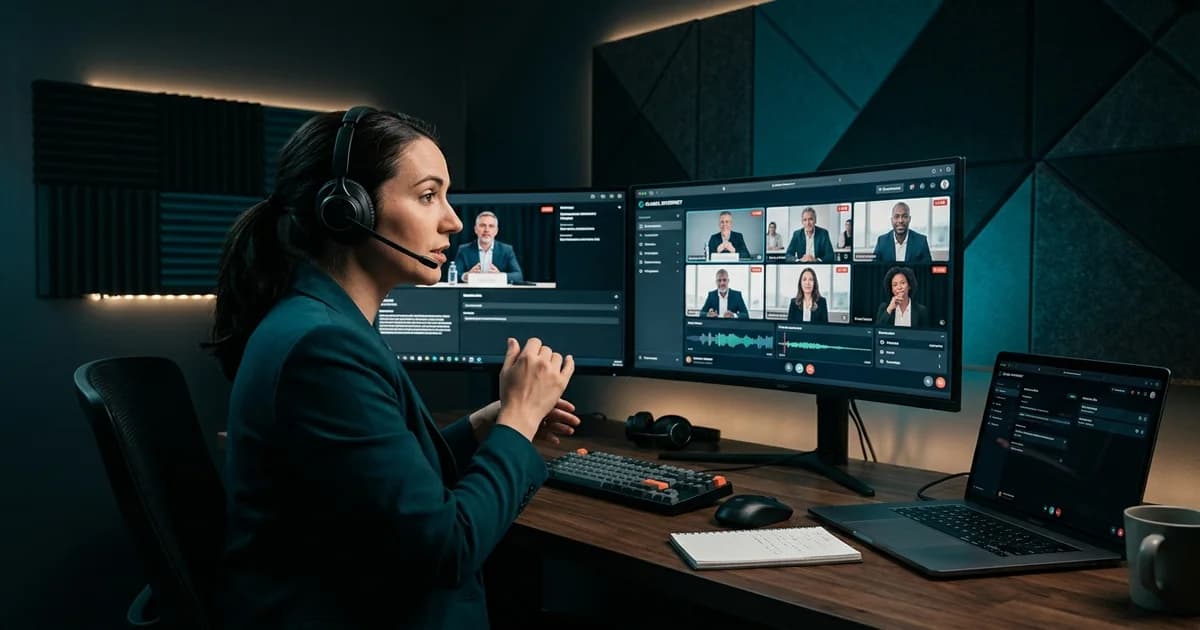
Simultaneous interpretation is the real-time translation of a spoken message. The interpreter listens to the source language and, within a matter of seconds, renders it into the target language. They are typically working from a soundproof booth or, with modern platforms, from a remote location. This mode requires immense concentration, which is why simultaneous interpreters often work in pairs, trading off every 20-30 minutes to maintain quality and prevent fatigue.
The key takeaway? It’s fast, it’s fluid, and it happens simultaneously. The speaker doesn’t need to pause, which keeps the event moving at a natural pace.
What is Consecutive Interpretation?
Now, picture a smaller, more intimate setting—like a doctor's appointment, a legal deposition, or a one-on-one business negotiation. Here, the speaker says a few sentences and then pauses. During that pause, the interpreter steps in and conveys the message in the target language. This back-and-forth exchange is the core of consecutive interpretation.
This method is less about speed and more about precision and direct interaction. The interpreter often takes detailed notes using a specialized system of symbols to ensure no nuance is lost. Because the process involves the speaker and interpreter taking turns, it effectively doubles the time needed for the conversation. It's a structured, stop-and-start dialogue.
Key Differences: Simultaneous vs Consecutive (Comparison Table)
Still feeling a little fuzzy on the details? This side-by-side comparison should clear things up.
| Feature | Simultaneous Interpretation | Consecutive Interpretation |
|---|---|---|
| Timing | Real-time, with a 2-5 second delay. | Stop-and-start; speaker pauses for interpretation. |
| Event Flow | Uninterrupted and fluid, keeps the original pace. | Conversational, but doubles the event length. |
| Best For | Large conferences, webinars, live broadcasts, summits. | Small meetings, interviews, HR, legal depositions, medical appointments. |
| Audience Size | Ideal for large audiences (15 to 5,000+). | Best for one-on-one or small groups. |
| Equipment | Traditionally requires booths, headsets, mics. Modern platforms are browser-based. | Often requires only a notepad and pen; no special tech needed. |
| Interaction | Less direct interaction; audience is primarily listening. | Highly interactive and conversational. |
| Accuracy | High, but focused on conveying the message quickly. | Potentially higher for complex details due to time for clarification. |
Pros and Cons of Simultaneous Interpretation
Advantages of Simultaneous Interpretation
- Time-Efficient: Your event runs on schedule without being doubled in length. This is a huge plus for packed agendas.
- Natural Flow: It maintains the energy and engagement of a live presentation because the speaker doesn't have to awkwardly pause.
- Audience Engagement: Attendees remain focused because they can follow along in real time, reacting to the speaker's tone and body language as it happens.
- Multi-Language Support: It’s easy to support many languages at once. Each language has its own channel, so attendees simply select the one they need.
Disadvantages of Simultaneous Interpretation
- Higher Cost: It often requires at least two interpreters per language and specialized equipment, making it more expensive.
- Technical Requirements: Traditionally, it demanded soundproof booths and complex hardware. While platforms like InterpretWise have removed this barrier by being 100% browser-based, the need for a stable setup remains.
- Less Interactive: It's designed for a listening audience, not a back-and-forth dialogue.
Pros and Cons of Consecutive Interpretation
Advantages of Consecutive Interpretation
- High Accuracy for Nuance: Interpreters have time to process complex information, ask for clarification if needed, and ensure every detail is precise. This makes it ideal for legal and medical settings.
- More Personal and Interactive: The conversational, turn-based nature fosters direct engagement between participants.
- No Special Equipment Needed: It can be done with just a pen and paper, which keeps costs down and simplifies logistics.
- Good for Dialogue: Perfect for Q&A sessions, interviews, or any format where conversation is key.
Disadvantages of Consecutive Interpretation
- Time-Consuming: Be prepared for your meeting to take twice as long, as everything is said twice.
- Disrupted Flow: The constant stop-and-start can break the rhythm of a presentation and cause speakers to lose their train of thought.
- Limited to One Language: It’s really only practical for bilingual meetings (i.e., one source and one target language).
- Not for Large Audiences: The format becomes chaotic and inefficient with more than a few people.
When to Use Simultaneous Interpretation
Choose simultaneous interpretation when the flow of your event and time are top priorities. It’s the go-to solution for:
- Large Conferences and Summits: For audiences of 20 to 5,000+, it's the only practical way to deliver real-time interpretation without derailing the schedule.
- Webinars and Virtual Events: Keep your online audience engaged with seamless, broadcast-quality audio translation.
- Corporate Town Halls & Board Meetings: Deliver important company-wide messages clearly and efficiently across multiple languages at once.
- Governmental and NGO Briefings: In formal settings where uninterrupted speeches are the norm, simultaneous is essential.
If you're organizing a large-scale event and need to keep things moving smoothly for a multilingual audience, simultaneous interpretation is your answer.
When to Use Consecutive Interpretation
Opt for consecutive interpretation when accuracy and interactivity in a small group are more important than speed. It excels in:
- Legal Settings: Courtrooms, depositions, and client-attorney meetings where every single word matters.
- Healthcare Appointments: Ensuring clear and precise communication between doctors and patients during medical consultations.
- HR Meetings and Interviews: For sensitive, one-on-one conversations like performance reviews or hiring discussions.
- Small Business Negotiations: When two parties need to have a detailed, back-and-forth discussion.
If your event is small, conversational, and focused on deep understanding over speed, consecutive is the right mode.
Can a Platform Support Both? The Hybrid Approach
So, what if your event has different needs? For instance, a keynote speech to a large audience followed by smaller, interactive breakout sessions or a Q&A. Do you have to choose just one mode?
Absolutely not.
This is where a flexible platform becomes invaluable. Modern interpretation solutions can easily accommodate a hybrid approach. You can use simultaneous interpretation for the main presentation to keep the energy high and the schedule tight. Then, for the interactive Q&A or breakout groups, you can switch to a consecutive mode to allow for more detailed, personal dialogue.
With a platform like InterpretWise, you aren’t locked into a single mode. You can have both AI-powered and human interpreters, and switch between simultaneous and consecutive sessions as needed. It's all managed from a simple, browser-based dashboard—no hardware, no app downloads, just seamless multilingual communication that adapts to your event’s specific needs. Ready to see how easy it can be? Start a Free Trial and explore the possibilities.
Frequently Asked Questions
PAA: What is the main difference between consecutive and simultaneous interpreting?
The primary difference is timing. Simultaneous interpretation happens in real time while the person is still speaking, whereas consecutive interpretation happens during pauses after the speaker has finished a few sentences.
PAA: When should you use simultaneous vs consecutive interpreting?
Use simultaneous for large events like conferences and webinars where time and flow are critical. Use consecutive for small, interactive settings like business meetings, medical appointments, or legal proceedings where detailed dialogue is the priority.
PAA: Is simultaneous or consecutive interpretation more accurate?
Both modes are highly accurate when performed by professional interpreters. However, consecutive interpretation can sometimes capture more nuance for highly technical or complex subjects because the interpreter has time to process the information and even ask for clarification.
PAA: Which is more expensive, simultaneous or consecutive interpretation?
Simultaneous interpretation is generally more expensive. It often requires two interpreters per language working in shifts and, traditionally, specialized equipment like booths and headsets. Consecutive usually requires only one interpreter and no special technology.
PAA: Can you use both simultaneous and consecutive interpretation at the same event?
Yes, and it's often a great strategy! You can use simultaneous interpretation for a main presentation and then switch to consecutive for a more interactive Q&A session or smaller workshops. Platforms like InterpretWise make it simple to support both modes within a single event.
Related Articles

Conference Interpretation Cost: A Complete 2026 Pricing Breakdown
What Is Remote Simultaneous Interpretation (RSI)? The 2026 Guide

The True Cost of Interpretation Booths (And How to Cut It by 80%)

How to Choose an Interpretation Service: 10 Critical Questions

Simultaneous Interpretation for Webinars: Everything You Need to Know

What is Whispered Interpretation (Chuchotage)? A Guide for Small Meetings