

You’ve booked a world-class keynote speaker. Your registration numbers are climbing. But there's a problem hiding in plain sight: a huge portion of your audience—partners, international team members, global customers—doesn't speak the presenter's language.
So, what do you do?
For years, the answer was clunky, expensive, and slow. You’d hire a team to build soundproof booths, run miles of cabling, and hand out hundreds of staticky radio headsets. It was a massive headache. Today, there's a much better way. It's called Remote Simultaneous Interpretation, or RSI.
And honestly, it’s completely changed the game for multilingual events.
What Is Simultaneous Interpretation?
Before we get to the "remote" part, let's cover the basics.
Simultaneous interpretation is the act of translating what a speaker is saying into another language in real time, with only a few seconds of delay. If you've ever seen a United Nations assembly on TV, you've seen it in action. A delegate speaks in their language, and interpreters, working in booths, instantly convey the message to listeners through headphones.
The key is that it happens simultaneously. The speaker doesn't have to pause and wait for the translation. This keeps the event flowing naturally.
What Is Remote Simultaneous Interpretation (RSI)?
Remote Simultaneous Interpretation (RSI) takes that same real-time experience and moves it online.
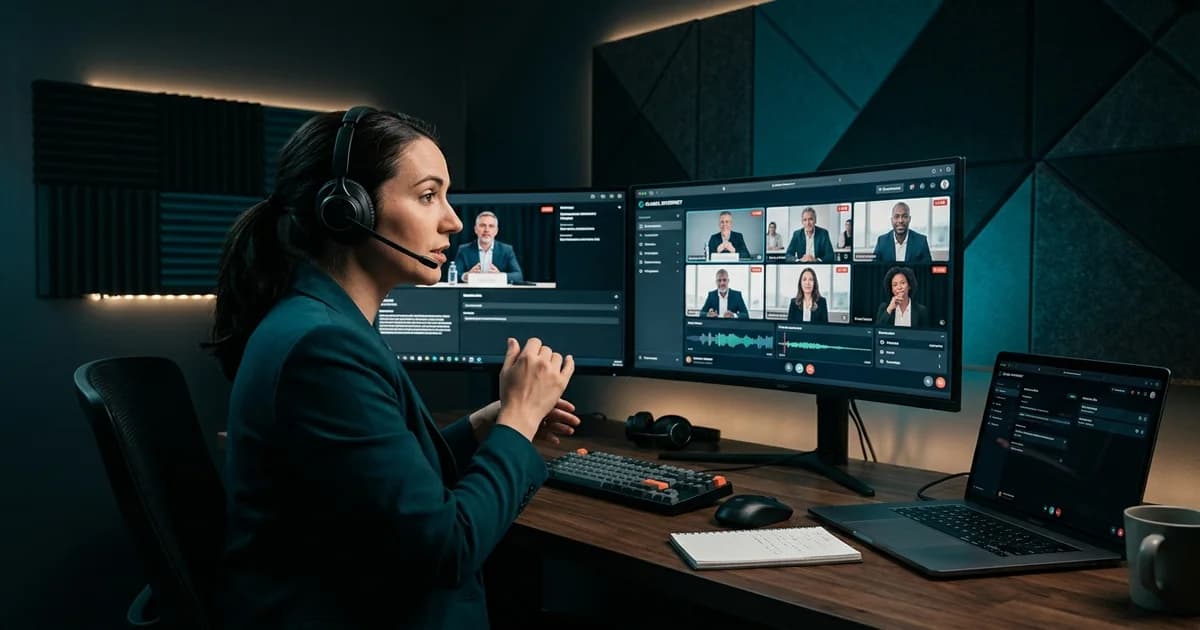
Instead of interpreters sitting in physical booths at your venue, they work from a remote location. They watch a live video feed of your event and deliver their interpretation through a cloud-based platform. Your audience can listen to the live translation directly on their own smartphones or laptops, often just by scanning a QR code.
This means no booths, no special hardware, and no complex onsite setup. For event organisers, this is a massive shift. A process that used to take 4-8 hours of technical work can now be done in under 30 minutes.
RSI platforms are designed to deliver language access for any kind of gathering, from virtual conferences and webinars to large-scale hybrid events.
How Does RSI Work? (Step by Step)
It might sound complex, but from a user's perspective, modern RSI is incredibly simple. Here’s how a platform like InterpretWise makes it happen:
- The Source Audio is Captured: The presenter speaks as they normally would. The audio from their microphone—whether on a stage, in a Zoom meeting, or on a Microsoft Teams call—is sent to the RSI platform.
- Interpreters Work Remotely: Professional human interpreters (or in some cases, an AI engine) receive the audio and video feed in real time. They listen to the speaker and simultaneously interpret the content into the target language.
- The Interpretation is Streamed: The newly interpreted audio is streamed back to the audience through the RSI platform.
- Attendees Listen on Their Own Devices: This is the best part for attendees. They don't need a special receiver. They just scan a QR code with their phone or click a link. This opens a simple web page in their browser—no app download needed. They select their language, put in their earbuds, and listen to the live interpretation.
The process also includes live subtitles and captions, which are a huge boost for accessibility and engagement.
RSI vs Traditional Interpretation Booths
For decades, if you wanted live interpretation, you had to build a mini-studio inside your event space. RSI changes that equation entirely. The cost savings and logistical benefits are huge, especially when you need to support multiple languages.
Let’s break down the differences.
| Feature | Traditional Booths | Modern RSI (like InterpretWise) |
|---|---|---|
| Setup Time | 4-8 hours per room | 15-120 minutes |
| Hardware | Soundproof booths, transmitters, receivers, headsets | Minimal. Attendees use their own smartphones. |
| Onsite Staff | Requires dedicated AV technicians to manage | Can be managed by your existing event team. |
| Scalability | Limited by physical space and hardware availability | Easily scales from 20 to 5,000+ participants. |
| Cost | High. Includes hardware rental, shipping, and tech labor. | Significantly lower. No hardware or shipping costs. |
| Flexibility | Fixed to one location. Difficult to add languages last-minute. | Works for in-person, virtual, and hybrid events. Add languages easily. |
| Attendee Experience | Bulky, often-unreliable radio-pack receivers. | Simple QR code scan on their own phone. No app needed. |
The bottom line is that RSI makes simultaneous interpretation accessible, affordable, and practical for events of all sizes, not just major international summits.
Simultaneous vs Consecutive Interpretation
When looking for interpretation services, you’ll run into two main types: simultaneous and consecutive. It’s a crucial distinction.
- Simultaneous Interpretation: This is what we've been talking about. The interpretation happens in real time while the person is still speaking. It’s ideal for conferences, webinars, and any event where you can't afford to interrupt the flow. The audience hears the translated speech almost instantly.
- Consecutive Interpretation: In this mode, the speaker talks for a minute or two, then pauses. The interpreter then steps in and relays what was just said in the target language. This doubles the time of any presentation, making it unsuitable for most conference settings. It’s more common in smaller-scale situations like doctor's appointments, legal depositions, or parent-teacher meetings.
For any live event with an audience, simultaneous interpretation is the standard.
AI RSI vs Human RSI vs Hybrid RSI
Not all RSI platforms work the same way. The engine behind the interpretation—whether it's a person or an algorithm—makes a big difference in quality, cost, and suitability for your event.
Here’s a look at the three main models.
AI-Only RSI
Some platforms, use artificial intelligence to provide interpretation. The AI "listens" to the speaker and generates a machine-translated voice and/or captions in real time.
- Pros: It's fast to set up, available on-demand, and generally the most affordable option. It can handle dozens of languages at once.
- Cons: AI can struggle with nuance, sarcasm, cultural idioms, and complex technical terms. While accuracy has improved, it's not yet at the level of a professional human interpreter, which can be a risk for high-stakes meetings.
Human-Only RSI
Other platforms focus on connecting you with professional human interpreters. Platforms like KUDO and Interprefy are well-known for providing access to a network of vetted, experienced linguists who perform the interpretation remotely.
- Pros: This offers the highest level of accuracy, nuance, and quality. For diplomatic sessions, critical business negotiations, or medical conferences, human interpreters are essential.
- Cons: It's the most expensive option. You have to book interpreters in advance, and their availability can be limited, especially for rare languages.
Hybrid RSI: The Best of Both Worlds
A hybrid approach, which is what we do at InterpretWise, combines the strengths of both AI and human interpreters.
How does it work? The AI runs in the background, providing instant, live-translated captions for all attendees. This is a huge win for accessibility and engagement. At the same time, you can have professional human interpreters on standby for the main languages or for specific high-stakes sessions where perfect accuracy is non-negotiable.
This model gives you:
- Universal Accessibility: Everyone gets live captions in their language.
- Cost-Effectiveness: You use human interpreters only where they're most needed, not for every single breakout room.
- Flexibility: You can decide session-by-session whether to use human interpreters, relying on the AI captions for less critical content.
For most conference organisers, the hybrid model offers the ideal balance of quality, cost, and attendee experience. Ready to explore how it could work for your event? You can See How RSI Works Live with a quick demo.
Who Uses RSI? Common Use Cases
The move away from hardware has opened up live interpretation to a much wider range of users. If you're running an event with an international or multilingual audience, RSI is likely a good fit.
Common use cases include:
- International Conferences and Trade Shows: Make every attendee feel included by offering live interpretation for keynotes and major sessions.
- Corporate Town Halls and All-Hands Meetings: When you have teams spread across the globe, RSI ensures everyone gets the message straight from leadership, in their own language.
- Webinars and Virtual Events: Expand your market reach by allowing a global audience to participate in your virtual events. RSI platforms integrate directly with tools like Zoom, Microsoft Teams, and YouTube Live.
- Training and Education: Deliver training sessions to multilingual teams simultaneously, ensuring everyone is on the same page.
- Government and Public Sector Meetings: From city council meetings to international diplomacy, RSI provides the secure and accurate interpretation needed for official proceedings.
- Hybrid Events: RSI is perfect for hybrid formats, as it delivers a consistent experience for both in-person and remote attendees. In-person attendees use their phones, and virtual attendees get the stream inside their meeting platform.
How to Choose an RSI Platform
The RSI market has grown quickly, and not all solutions are created equal. When you're evaluating a platform for your event, here are the key questions to ask:
- How do attendees access the audio? The biggest friction point is the attendee experience. Do they have to download an app? Or can they just scan a QR code and listen in their browser? A no-app solution like InterpretWise is almost always better, as it removes a barrier for users.
- What hardware is required? Be wary of any platform that still requires you to rent or buy proprietary hardware. True modern RSI is software-based and uses the devices your attendees already own: their smartphones.
- How fast is the setup? Ask about the setup process. Can you be ready to go in 30 minutes, or does it require hours of technical configuration and support from an AV team?
- What integrations are available? Your RSI platform should work with the tools you already use. Check for native integrations with Zoom, Microsoft Teams, Google Meet, Webex, and live streaming platforms.
- What is the interpretation model? Does the platform offer AI-only, human-only, or a hybrid model? Think about the needs of your event. For a high-stakes legal or medical conference, human accuracy is key. For a more casual internal meeting, AI might be enough. A hybrid option gives you the flexibility to choose.
- Does it include live captions? Live captions are no longer a "nice to have." They are critical for accessibility and are increasingly expected by attendees. The upcoming European Accessibility Act highlights the need for features like captions and localized content for EU audiences.
- What does the pricing model look like? Some platforms charge high enterprise license fees. Others, like InterpretWise, offer more flexible, event-based pricing that is significantly more affordable, especially compared to traditional interpretation booths.
Making your event truly multilingual is a powerful way to boost engagement and show your global audience you care. Choosing the right technology partner makes all the difference. If you're curious about our approach, we’d be happy to show you. See How RSI Works Live.
Frequently Asked Questions (7 questions)
How much does remote simultaneous interpretation cost?
The cost of RSI varies based on the number of languages, the duration of the event, and whether you use human or AI interpreters. However, it's almost always significantly cheaper than traditional interpretation because you save on hardware rental, shipping, and onsite technician costs. Platforms like InterpretWise offer event-based pricing that avoids large annual contracts.
Does Zoom have built-in simultaneous interpretation?
Yes, Zoom does offer a simultaneous interpretation feature, but it has limitations. It requires you to manually assign interpreters to language channels within the Zoom interface, and attendees must navigate Zoom's menus to find and select their language. RSI platforms like InterpretWise offer a more user-friendly experience (like a simple QR code) and can be integrated into Zoom to provide a better interface and a hybrid AI+human model.
What is the difference between RSI and VRI?
RSI (Remote Simultaneous Interpretation) is used for one-to-many scenarios, like a conference or webinar, where one person is speaking to an audience. VRI (Video Remote Interpreting) is typically used for two-way or small group conversations, like a doctor's appointment or a customer service call, and is often consecutive (speaker talks, then interpreter talks).
Can I get live captions with RSI?
Yes, modern RSI platforms like InterpretWise include live, AI-powered captions as a standard feature. These can be delivered in over 20 languages simultaneously, which is a major benefit for accessibility and helps comply with regulations like the European Accessibility Act.
What equipment do I need for RSI?
For the event organizer, almost nothing beyond your existing AV setup (a mic for the speaker and an internet connection). For interpreters, they need a good computer, a high-quality headset, and a stable internet connection. For attendees, all they need is their own smartphone and a pair of headphones.
How many languages can an RSI platform support?
This depends on the platform. AI-driven platforms can support dozens of languages simultaneously. For human interpretation, the number depends on the availability of professional interpreters, but platforms can coordinate teams for 20+ languages for a single event. InterpretWise supports over 20 languages simultaneously with human interpreters and many more with AI captions.
Is AI interpretation accurate enough for a conference?
It depends on the context. For general sessions where the goal is to give attendees the main idea, modern AI is often sufficient. However, for high-stakes content, professional human interpreters are still recommended for ensuring complete accuracy. This is why a hybrid model, which offers both, is often the safest and most flexible choice for conference organizers.
*
Related Articles
Hybrid Event Interpretation: A Complete Technical & Logistics Guide

The True Cost of Interpretation Booths (And How to Cut It by 80%)

Simultaneous vs. Consecutive Interpretation: Which to Choose for Your Event?

RSI Platform Security: The IT Checklist for Remote Simultaneous Interpretation
The Ultimate Technical Guide to Audio Setup for Remote Simultaneous Interpretation

How to Integrate Browser-Based Interpretation Into Your Event Tech Stack