

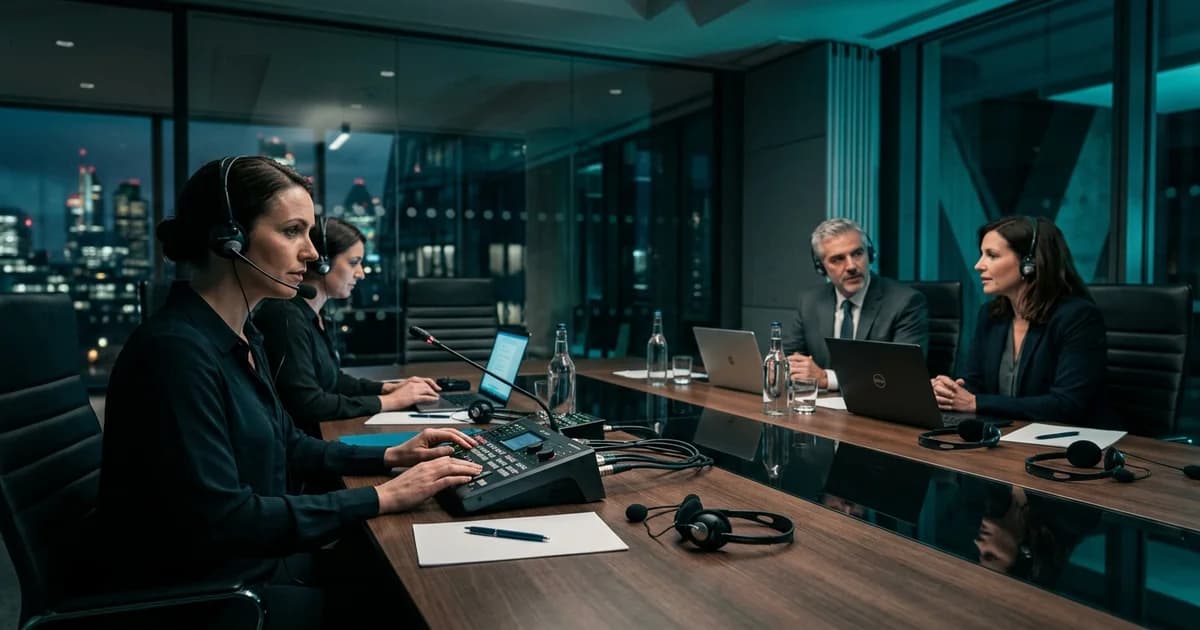
You're finalising the budget for your next big conference. The venue is booked, speakers are confirmed, and catering is sorted. Then the quote for interpretation services lands in your inbox, and it’s a shock. Sound familiar? Understanding the real conference interpretation cost is one of the biggest challenges for event organizers today. It's often much more than just the interpreter's fee.
But it doesn't have to be a budget-breaker.
The world of interpretation has split into two very different paths: the traditional, hardware-heavy approach and the modern, software-based model. The price difference between them is significant. This guide breaks down all the costs for 2026, showing you where your money goes and how new technology can save you thousands.
The True Cost of Traditional Interpretation Booths
For decades, this was the only way. If you wanted live, multilingual translation, you needed to build a mini broadcast studio inside your event space. The costs add up fast, and many are hidden.
First, you have the human interpreters. For simultaneous interpretation, you always need at least two interpreters per language. This isn't an upsell; it's a requirement for quality. It's an intense job, and they work in 20-30 minute shifts to avoid fatigue and maintain accuracy. Daily rates for a single, experienced conference interpreter can range from $500 to over $1,500, depending on the language and subject matter. For a two-day event with three target languages, you could be looking at over $10,000 in fees before you’ve even considered the hardware.
And that’s where the real expenses begin.
The Hardware Bill:
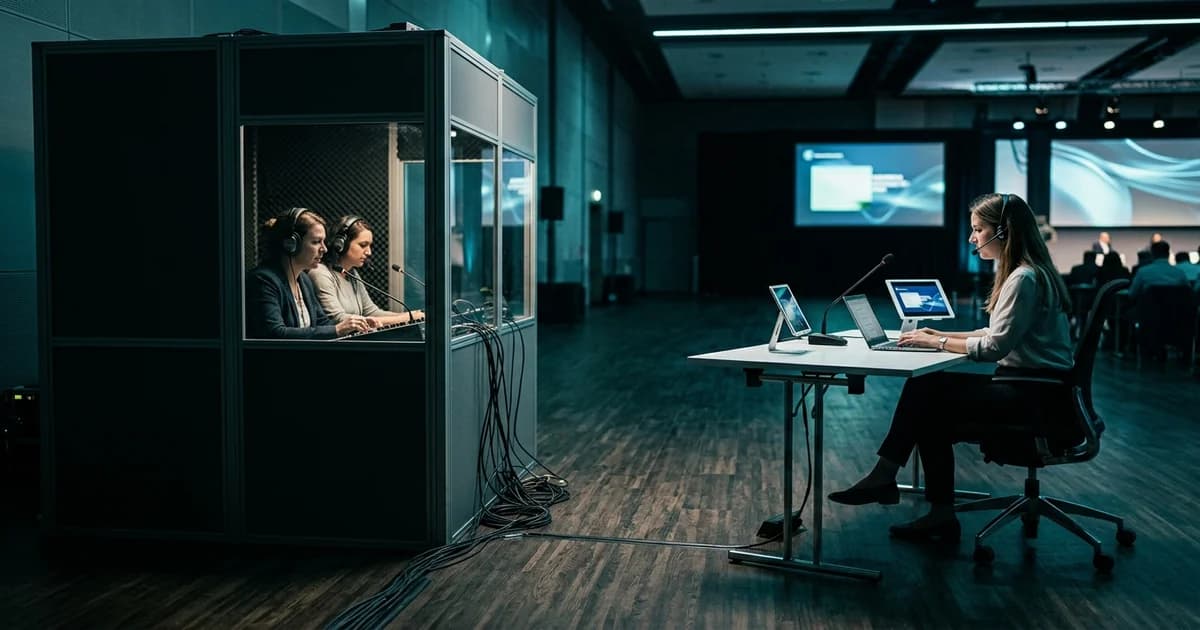
- Soundproof Booths: These aren't small. You need to rent, ship, and construct ISO-certified booths. Booth rental alone can be $500-$700 per day, per booth.
- Equipment Rental: This includes interpreter consoles, transmitters, and hundreds of individual headsets and receivers for attendees. Costs can be $15-$20 per attendee or a few thousand dollars per day for a package.
- AV Technicians: You need a specialized AV team to set up, manage, and troubleshoot the equipment. A technician's day rate is typically between $500 and $700.
- Space Rental: Booths take up valuable floor space that you're paying for.
The Hidden Logistics Bill:
- Interpreter Travel: If you can't find specialized interpreters locally, you're paying for flights, hotels, and per diems.
- Shipping & Drayage: Getting the booths and hardware to the venue is a significant logistical cost.
- Long Setup Times: A traditional setup takes 4-16 hours, which means paying your AV team and venue for extra time.
When you add it all up, the "all-in" cost for a traditional setup is often double or triple the initial interpreter fee. It’s a model built on expensive hardware, complex logistics, and lots of billable hours.
How Much Does RSI Software Cost?
Remote Simultaneous Interpretation (RSI) platforms flip the model on its head. Instead of bringing the interpreters and their hardware to the event, RSI uses software to bring the interpretation to the attendees' own devices.
This changes the cost equation dramatically.
Platforms like InterpretWise operate on a completely different model. There are no booths and no hardware to rent. Attendees simply scan a QR code and listen to the interpretation on their own smartphones with their own headphones. The entire setup can be done in under 30 minutes.
RSI pricing is typically usage-based, making it much more flexible. Common pricing factors include:
- The number of languages needed.
- The duration of your event.
- The number of attendees who need to listen.
- The level of support required.
Instead of a massive upfront bill for hardware and logistics, you're paying for the software and the professional interpreters, who can now work from anywhere in the world. This eliminates travel and accommodation costs entirely. Some platforms, like Interprefy, offer plans based on a block of hours, while others may offer per-event pricing. Wordly, an AI-only platform, prices based on packages of hours and attendees.
This software-first approach means you can get all the benefits of professional, human-powered interpretation for a fraction of the traditional cost. For organisations running multiple events, it provides a scalable and predictable budget item.
Ready to see how much you could save? InterpretWise provides a detailed, no-obligation quote tailored to your exact event needs. Get a Custom Quote today.
AI vs Human Interpreter Pricing
A new factor in the cost discussion is the rise of fully automated AI interpretation. It’s important to understand the difference.
AI-Only Platforms (e.g., Wordly): These platforms use artificial intelligence to provide live, machine-generated audio translation and captions. They are incredibly cost-effective, often priced as a simple hourly package. For dozens of languages, this can be significantly cheaper than even a single human interpreter. The quality is consistent and available 24/7.
- Best for: Internal meetings, training sessions, and events where getting the general meaning across is the main goal.
Hybrid AI + Human Platforms (e.g., InterpretWise): This model offers the best of both worlds. You get the cost-efficiency and scalability of AI, including live subtitles, combined with the nuance and accuracy of professional human interpreters. Event organizers can choose human interpretation for main stage sessions and rely on AI for smaller breakouts, for example.
- Best for: High-stakes conferences, diplomatic meetings, and any event where accuracy, cultural nuance, and brand reputation are critical. The human element is essential for complex subjects like legal or medical content.
The choice isn't just about cost; it's about risk management. For a sales kick-off or a sensitive shareholder meeting, the potential cost of a machine-driven misunderstanding is far higher than the cost of a professional human interpreter. A hybrid platform allows you to match the right technology to the right context.
Cost Comparison Table: Traditional vs RSI Platform
| Feature / Cost Item | Traditional Booths | RSI Platform (like InterpretWise) |
|---|---|---|
| Interpreter Fees | $500 - $1,500+ per day, per interpreter (2 needed per language) | $500 - $1,500 per day, per interpreter (remote) |
| Hardware | Booths, consoles, 100s of headsets. Rent: $1,500-$5,000/day | None. Attendees use their own smartphones. |
| Setup Time | 4-8 hours | 15-120 minutes |
| Travel & Logistics | Required for interpreters and hardware shipping. Can add thousands. | Eliminated. Interpreters and platform are remote. |
| Scalability | Limited by physical hardware and space. | Easily scales from 20 to 5,000+ attendees. |
| Attendee Experience | Clunky rental headsets, must stay in range. | QR code access on their own phone. No app needed. |
| Flexibility | Very rigid. Adding a language last-minute is nearly impossible. | Extremely flexible. Add languages or scale up easily. |
What Affects Interpretation Pricing?
Whether you choose a traditional or modern solution, several key factors will influence your final quote.
- Number of Languages: Each language needs its own team of interpreters, so this is the biggest cost driver.
- Language Rarity: Common pairs like English-Spanish are more affordable than rare combinations like Japanese-Swahili due to the smaller pool of qualified interpreters.
- Event Duration: Interpreters are typically booked in half-day or full-day blocks. A full-day rate covers a 6-8 hour period.
- Subject Matter: Highly technical content (medical, legal, financial) requires interpreters with specialized expertise, who command higher rates.
- Number of Attendees: With traditional hardware, this directly impacts headset rental costs. With RSI platforms, it can be a factor in the software license fee.
- Service Model: A fully managed service with a dedicated project manager will cost more than a self-service platform.
How to Budget for Interpretation at Your Next Event
Feeling overwhelmed? Don't be. Budgeting for interpretation is straightforward if you follow a few simple steps.
First, define your needs clearly. How many attendees truly need interpretation? Which languages are essential versus "nice-to-have"? Knowing this prevents overspending.
Second, decide on the right tool for the job. Is the context a low-risk internal update where AI-only is sufficient? Or is it a high-stakes global launch where the accuracy of human interpreters is non-negotiable?
Third, engage with providers early. The best interpreters get booked months in advance. Contacting a platform like InterpretWise early in your planning process allows you to get a clear and comprehensive quote that you can build your budget around, with no nasty surprises. A good partner will ask the right questions to ensure the plan is accurate from the start.
By moving away from hardware-based models, you can slash interpretation costs while providing a better, more accessible experience for your attendees. It's about spending smarter, not just spending less.
If you’re ready to see what a modern, hardware-free solution would cost for your specific event, we can provide a transparent breakdown. Get a Custom Quote.
Frequently Asked Questions (FAQs)
How much does simultaneous interpretation cost for a 200-person conference?
The cost can vary dramatically. For a one-day, two-language event using traditional booths, you could spend $8,000-$15,000+ when you include hardware, technicians, and interpreter fees. With an RSI platform like InterpretWise, the cost could be 50-70% less by eliminating hardware and travel.
Can I get interpretation for a hybrid event?
Yes, absolutely. RSI platforms are perfect for hybrid events. Remote interpreters can service both your in-person audience (who listen on their phones) and your virtual attendees through integrations with platforms like Zoom, Teams, and Google Meet.
What is the difference between RSI and traditional interpretation booths?
The key difference is hardware. Traditional interpretation requires renting and setting up physical soundproof booths, consoles, and hundreds of headsets. RSI (Remote Simultaneous Interpretation) is a software platform that delivers interpretation directly to attendees' smartphones, eliminating the need for any specialized hardware or lengthy setup.
Does Zoom have built-in simultaneous interpretation?
Zoom offers a basic built-in interpretation feature, but it requires you to source, vet, and manage your own interpreters. Full-service RSI platforms like InterpretWise handle all the logistics, provide professional conference-level interpreters, and offer technical support for a more robust solution that integrates with Zoom.
How many languages can InterpretWise support at the same time?
InterpretWise can support over 20 languages simultaneously for a single event. Because our platform is software-based and uses remote interpreters, we can source experts in numerous language pairs from around the globe without the logistical constraints of traditional on-site setups.
Related Articles

AI vs Human Interpretation: Which Is Right for Your Event?
The True Cost of Interpretation Booths (And How to Cut It by 80%)

How to Choose an Interpretation Service: 10 Critical Questions

How to Calculate the ROI of Your Multilingual Event
Maximizing Impact: A Guide to Cost-Effective Interpretation for NGOs and Non-Profits
Beyond Spanish: How Language Pair Rarity Impacts Interpretation Costs