

01
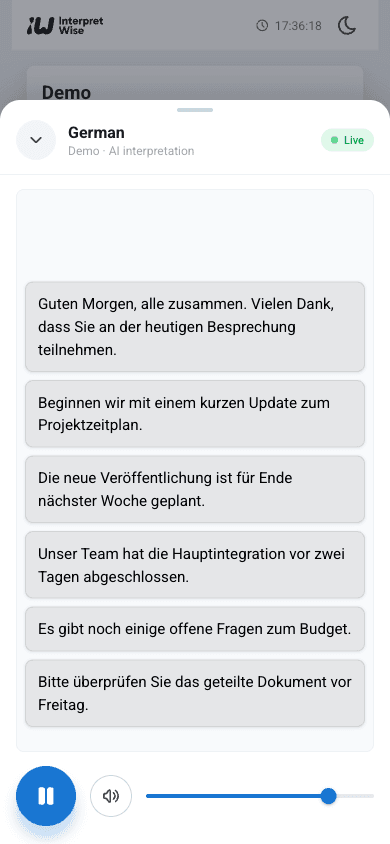
How AI simultaneous interpretation works
The real-time pipeline from stage audio to interpreted voice - latency, engines, voices and humans in the loop.
Read more
02
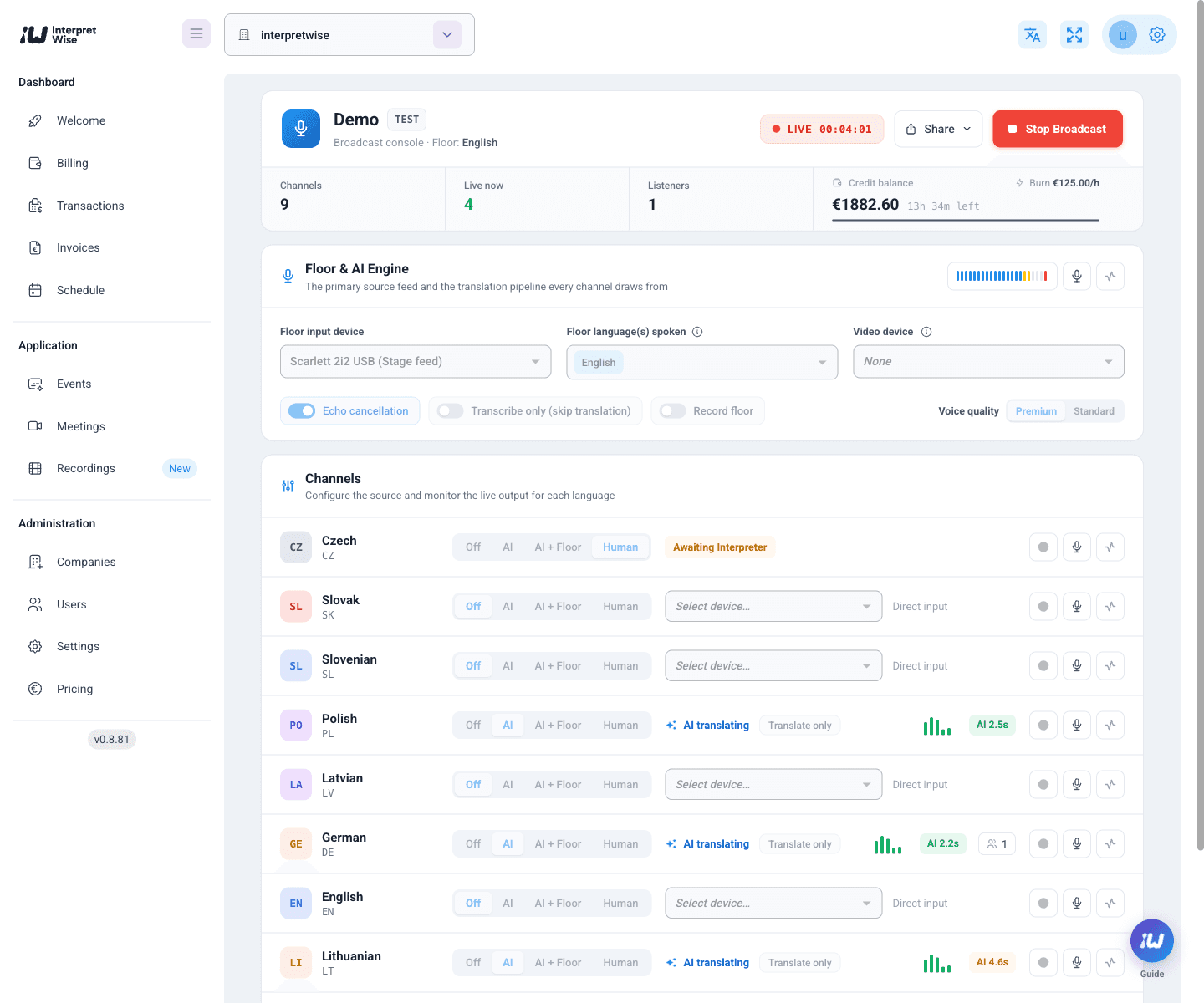
Running a live event
A step-by-step operator guide: create the event, configure language channels, sound-check, go live and share access.
Read more
03
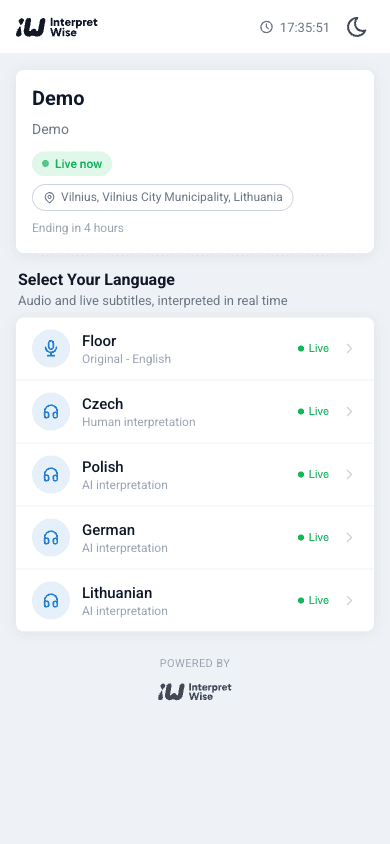
An audience without headsets
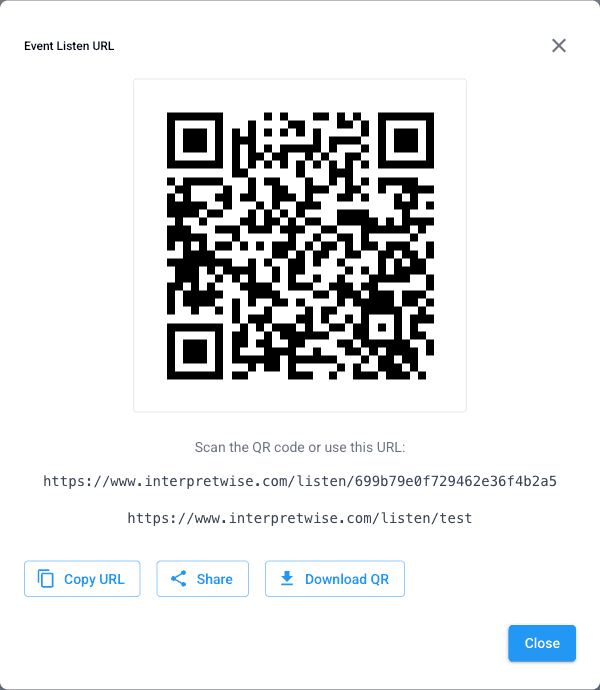
Attendees listen on their own phones via QR code - no receivers to distribute, with live captions and big-screen subtitles.
Read more
04
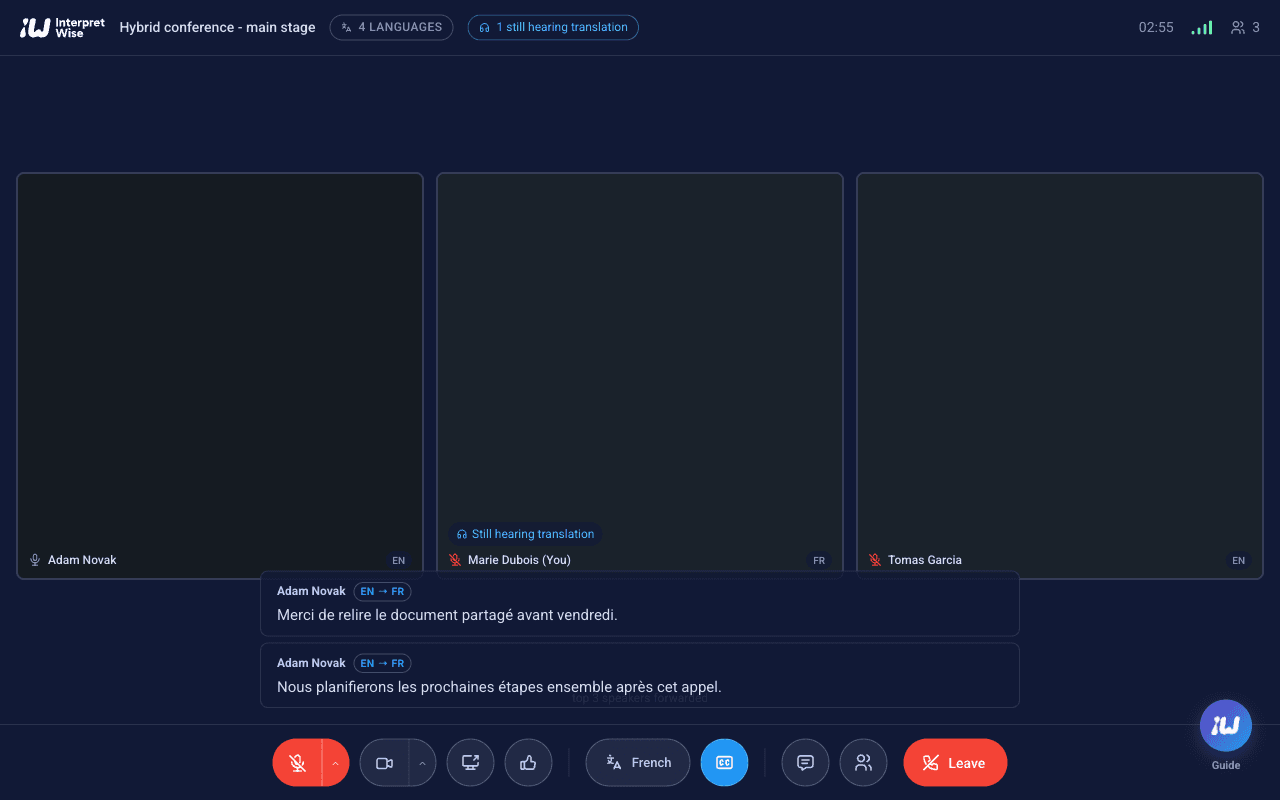
Hybrid and remote events
Remote listeners, live-streamed events and interactive hybrid rooms where every participant speaks and listens in their own language.
Read more
05
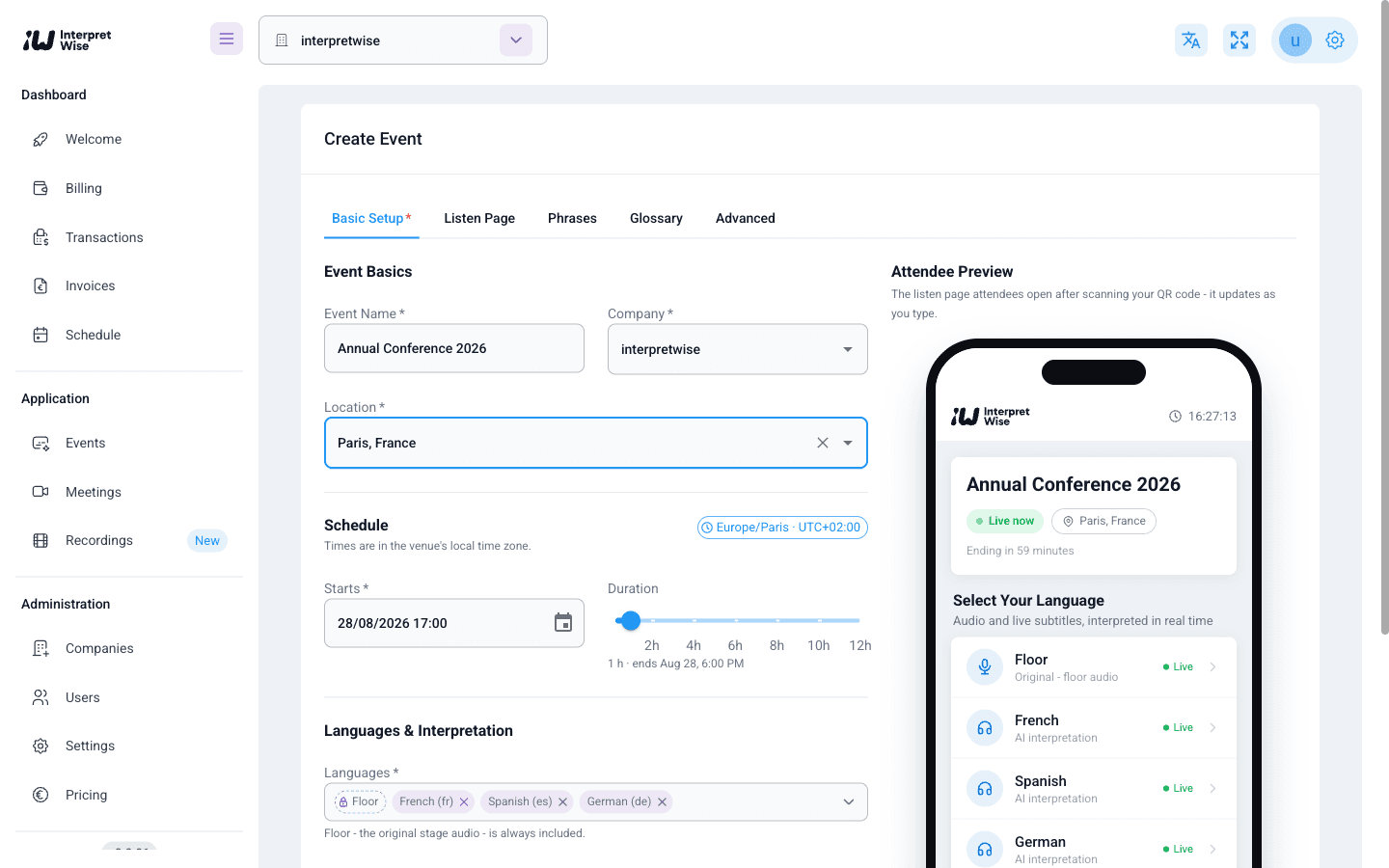
Languages and voices
30+ languages live today from an engine covering 80+, with natural neural voices in two tiers.
Read more
06
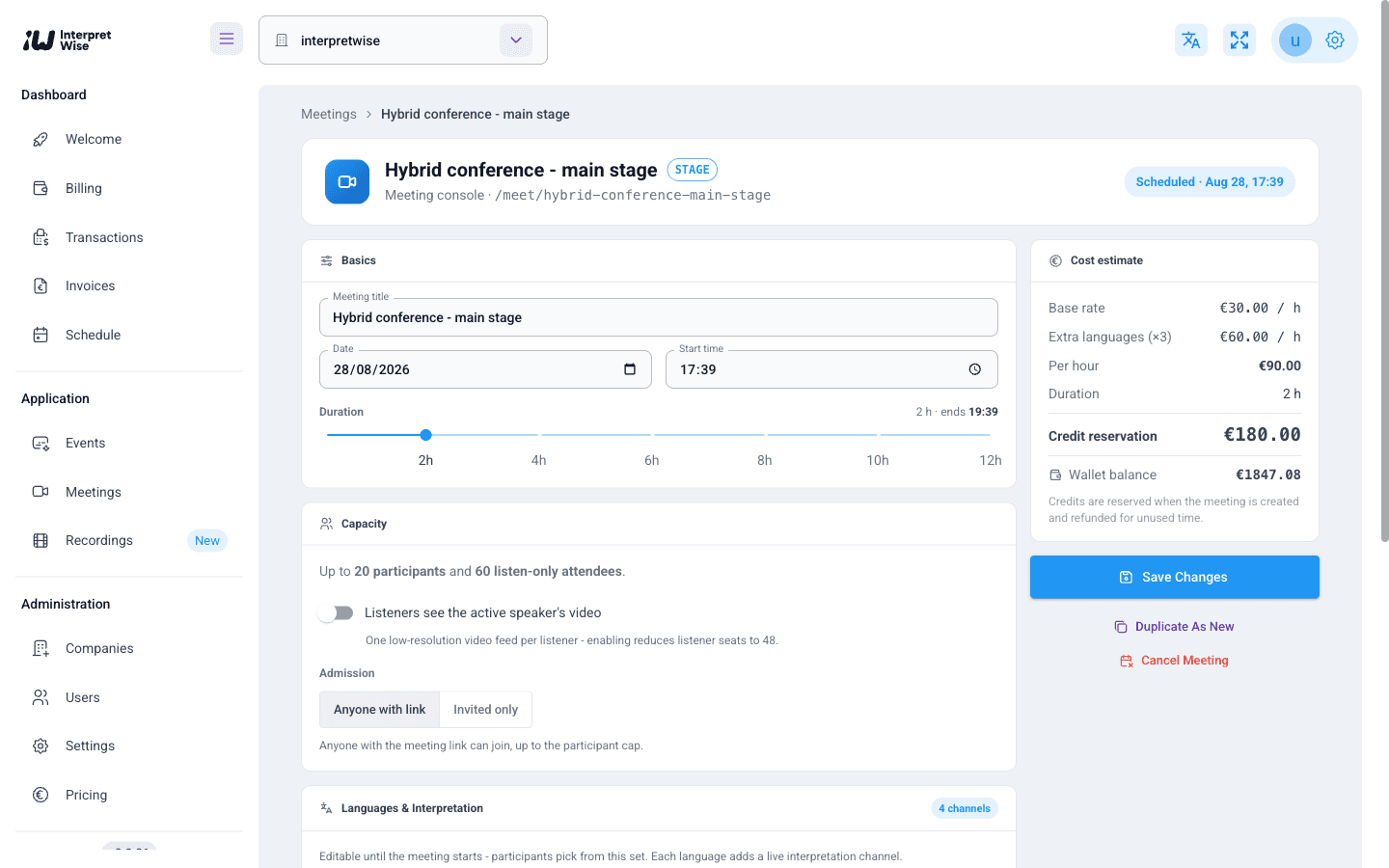
Quality control
Glossaries, event terminology, rehearsals, live monitoring and per-session latency reports - quality managed, not assumed.
Read more
07
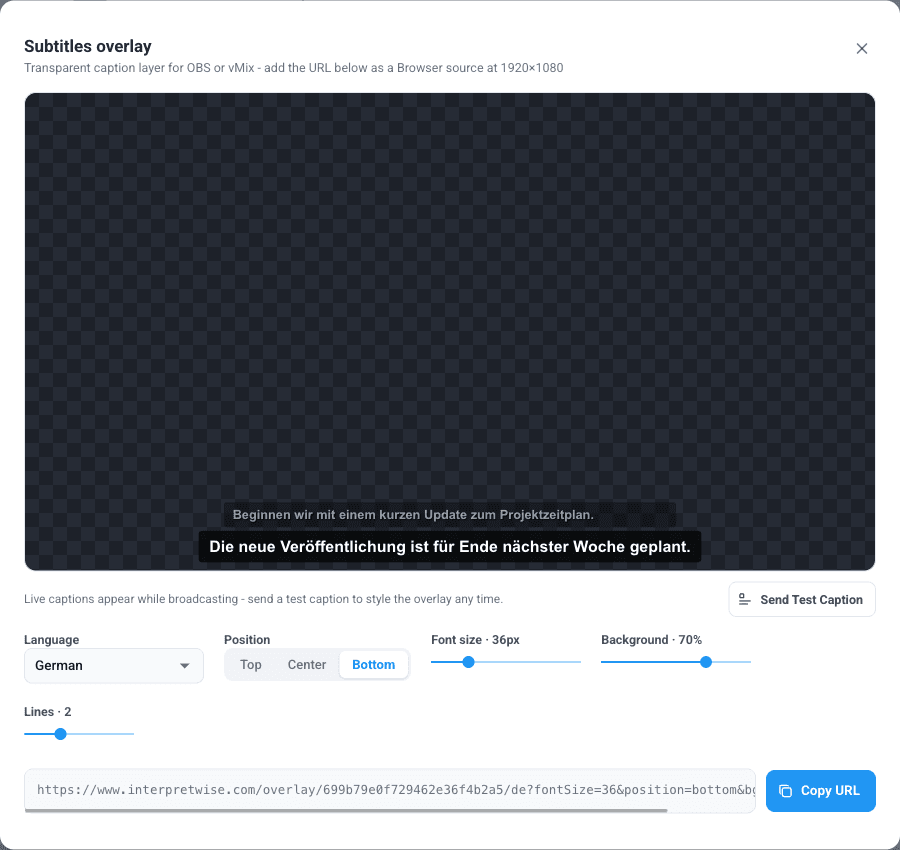
AV integration
One board feed in, browser sources and per-language audio out - signal flow, equipment and caption overlays for OBS/vMix.
Read more
08
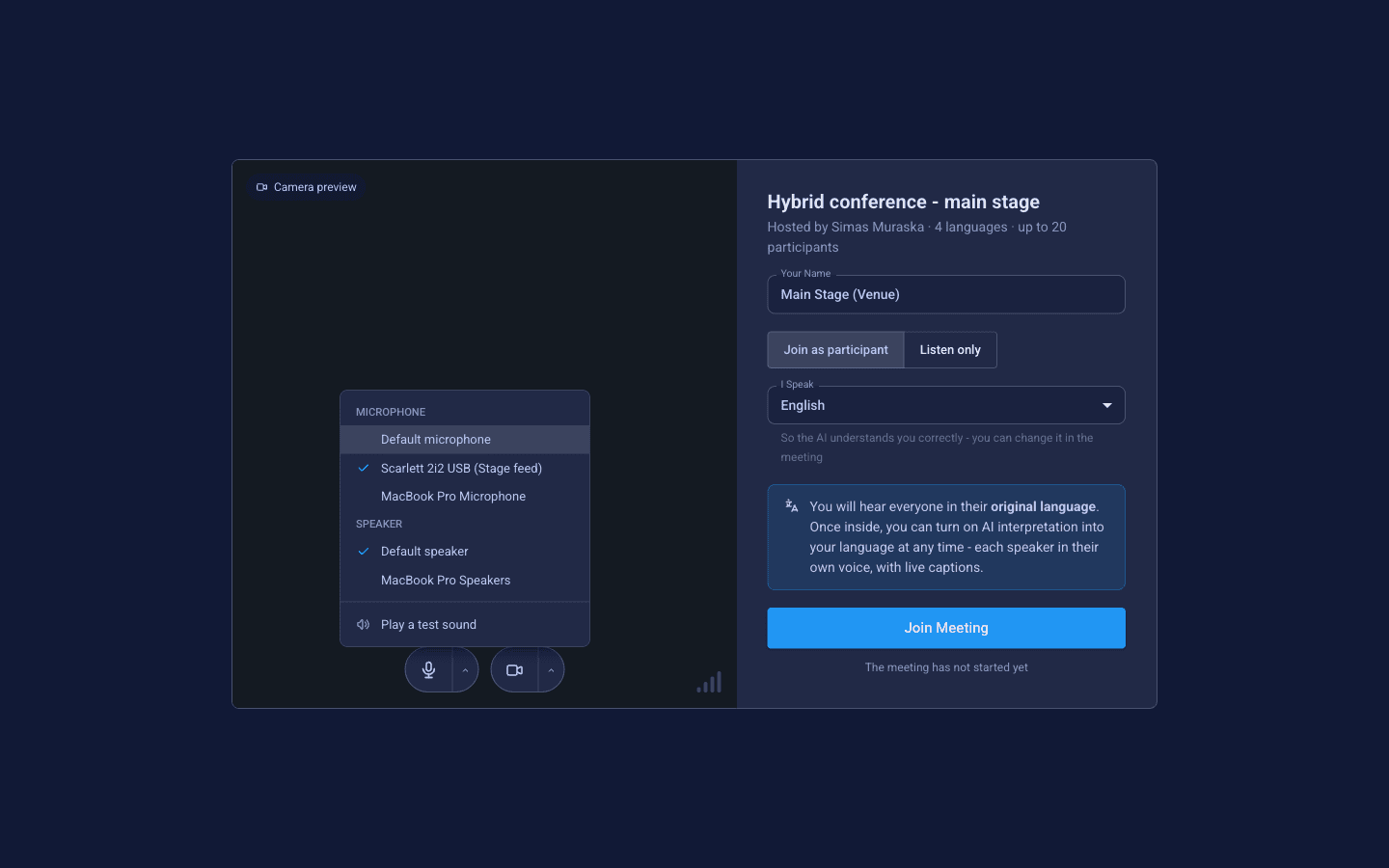
Network and reliability
Firewall and bandwidth requirements, dropout behaviour and the audio-first design that keeps events on air.
Read more
09
Access control and security
Unlisted event links and rotatable codes, patterns for paid events, and GDPR-compliant EU infrastructure.
Read more
See It Live
Try Interpretwise at Your Next Event
80+ languages in real time - no booths, no dedicated receivers. Attendees scan a QR code and listen on their own phones. Full setup takes about 15 minutes.