

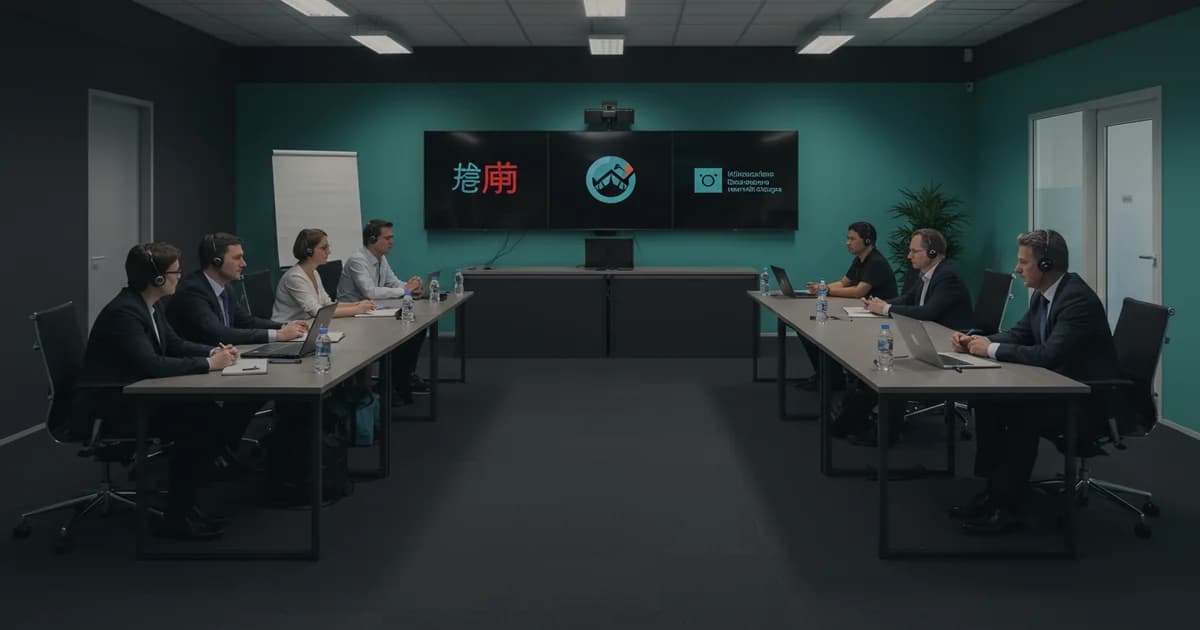
You've planned the perfect corporate town hall. Your leadership team is prepped with compelling updates. The presentation deck is polished. But as you look out at your global team, a nagging question emerges: Is everyone truly included?
For a growing number of companies, the default, English-only all-hands meeting is no longer enough. With distributed teams spanning continents and cultures, delivering a message in a single language means a significant portion of your workforce is either disengaged or left behind entirely. They might catch the gist, but they miss the nuance, the conviction, and the feeling of being a valued part of the team.
Running a multilingual town hall isn't just about translation—it's about transformation. It's about shifting from a monologue to a genuine dialogue and proving that every employee's voice matters, regardless of their native language. And it's more straightforward than you might think.
The Business Impact of Language-Inclusive Internal Communications
Why invest in interpretation for all-hands meetings? The data paints a clear picture. Globally, employee engagement has fallen, with only 21% of workers feeling engaged in 2024. This disengagement comes at a staggering cost—an estimated $8.9 trillion in lost productivity worldwide.
When employees don't feel connected, performance suffers. Highly engaged teams, on the other hand, are 18% more productive and drive 23% higher profitability. A key driver of this engagement is a sense of belonging and the feeling that leadership listens. Language is the most fundamental tool for connection. By providing professional interpretation, you're not just passing on information; you're building a bridge.
A truly inclusive virtual meeting sends a powerful message: we see you, we hear you, and we value your contribution. It dismantles language hierarchies and fosters psychological safety, allowing ideas and feedback to flow freely across your entire organization. This isn't just good corporate culture—it's a strategic advantage in attracting and retaining top global talent.
Planning Your Multilingual Town Hall: A Strategic Checklist
A successful multilingual event doesn't happen by accident. It requires a strategic approach that puts the attendee experience first. Think of it as building the foundation for a seamless and engaging event.
Here's a simple checklist for your global town hall setup:
- Define Your Languages: Start by identifying the primary languages spoken by your employees. You don't have to cover every language at once. Focus on the top 3-5 to begin, based on your team's demographics.
- Book Your Interpretation Solution: Decide on your approach. Will you need human interpreters for complex, high-stakes content, or can an AI-powered solution handle the session? Some modern platforms offer a hybrid approach, letting you choose what’s best for each meeting. Book this service well in advance, especially for human interpretation.
- Prep Your Speakers and Interpreters: Great interpretation requires context. Provide your interpreters (or train your AI engine) with the presentation slides, speaker notes, and any specialized terminology or acronyms at least 48 hours in advance. This allows them to deliver a far more accurate and nuanced performance.
- Communicate Clearly with Attendees: This is the most crucial step. Don't make language access an afterthought. Before the event, send out clear, simple instructions in all supported languages. Explain how to access the interpretation audio channels. A great tip is to use visuals or a short video tutorial. A platform that provides access with a simple QR code scan can make this process incredibly easy for everyone.
- Run a Tech Rehearsal: Schedule a brief run-through with your speakers, moderators, and the interpretation provider. Test the audio, the platform integrations, and the process for managing multilingual Q&A. This 30-minute check can prevent 99% of potential live-event issues.
Tech Stack: Integrating Interpretation into Teams, Zoom, or Your Platform
The biggest myth about simultaneous interpretation is that it requires complex, expensive hardware and technicians in headsets. Not anymore.
Modern multilingual meeting solutions are 100% browser-based. This means no one—not the event organizers, not the attendees—needs to download a special app. Your team can join on the platforms they already use every day.
The best interpretation platforms integrate directly with:
- Zoom
- Microsoft Teams
- Google Meet
- Webex
- YouTube Live
For attendees, the experience is simple. They join the main event just as they always would. Then, on their own smartphone or in another browser tab, they scan a QR code or click a link. That’s it. They can now listen to the live interpretation in their chosen language, using their own headphones. This "no-download interpretation app" approach is key to adoption and removes a huge friction point for your global team.
This setup is incredibly flexible, scaling from a 20-person regional update to a 5,000+ attendee global all-hands meeting. And because the solution is software-driven, you can set up a fully multilingual event in under 30 minutes.
Managing Live Multilingual Q&A with Fairness and Efficiency
The Q&A session is often the most valuable part of a town hall. It’s where employees connect directly with leadership. But in a multilingual setting, it can quickly become a logistical nightmare. How do you ensure a fair chance for a question from a Spanish speaker in Madrid, a German speaker in Berlin, and a Japanese speaker in Tokyo?
Relying on the chatbox can create chaos. Instead, a dedicated multilingual Q&A tool is essential for an inclusive and efficient process.
Here’s how it works:
- Text-Based Submission: Attendees type their questions in their own language into the Q&A interface on their device.
- Instant Translation for Moderator: The moderator sees all incoming questions translated into their own language in real-time. This allows them to group similar questions and select a representative mix from different regions and languages.
- Read Aloud and Interpreted: The moderator reads the selected question aloud in the main event language. The interpreters then simultaneously translate the question back to all other languages for the audience.
- Answer for All: The leader answers the question, and that answer is interpreted live for everyone.
This process ensures fairness, efficiency, and full comprehension. It turns the Q&A from a potential point of exclusion into a powerful tool for global engagement. Including live captions in multiple languages adds another layer of accessibility, helping everyone follow the conversation.
Post-Event: Using Recordings and Transcripts to Maximize Impact
The value of your multilingual town hall shouldn't end when the live event does. Capturing the event for on-demand viewing is critical for employees in different time zones or those who couldn't attend live.
A robust interpretation platform will provide you with a recording that includes all the different language audio tracks. This lets employees re-watch the event and select the language of their choice.
But you can go one step further.
Ask for multilingual transcripts of the entire event. These text files are invaluable for:
- Accessibility: Providing a written record for those who prefer to read.
- Searchability: Allowing employees to quickly find specific topics or announcements.
- Content Repurposing: Your internal comms team can easily pull quotes, key messages, and data points to create follow-up emails, intranet articles, or leadership blogs.
By extending the life of your content with multilingual recordings and transcripts, you maximize the ROI of your event and reinforce your commitment to inclusive communication.
Ready to see how a simple, browser-based platform can transform your global town halls? See How It Works.
FAQs: Global All-Hands and Town Hall Meetings
How do you make a multilingual meeting successful?
Success comes from a mix of strategic planning and the right technology. Plan ahead by identifying languages, briefing interpreters with your materials, and clearly communicating access instructions to attendees. Use a simple, browser-based platform that doesn't require app downloads and integrates with tools like Zoom or Teams to ensure a smooth technical experience.
How do you host an all-hands meeting for a global team?
To truly host a global all-hands, you must go beyond a single language and time zone. Offer simultaneous interpretation in your employees' primary languages. Use a platform that allows for live Q&A from all languages. Finally, record the session with all audio tracks and provide multilingual transcripts so those in different time zones can have the full experience on-demand.
Do I need special equipment for simultaneous interpretation?
No. Modern remote simultaneous interpretation (RSI) platforms have eliminated the need for special hardware, booths, or on-site technicians. Attendees use their own smartphones and headphones to listen to the interpretation. The entire system is browser-based, making it incredibly accessible and cost-effective.
What's the difference between human and AI interpretation?
Human interpretation is performed by professional linguists who can capture nuance, cultural context, emotion, and complex terminology, making it ideal for high-stakes leadership communication. AI interpretation uses machine translation to provide instant, automated audio translation. While improving fast, it can miss context and nuance. The best approach is often a hybrid one, using a platform that allows you to choose between AI for speed and cost-efficiency or a human interpreter for quality and accuracy, depending on the meeting's importance.
Related Articles
Zoom Interpretation: How to Go Beyond Zoom's Basic Feature
What Is Remote Simultaneous Interpretation (RSI)? The 2026 Guide
Simultaneous Interpretation for Webinars: Everything You Need to Know

How to Calculate the ROI of Your Multilingual Event
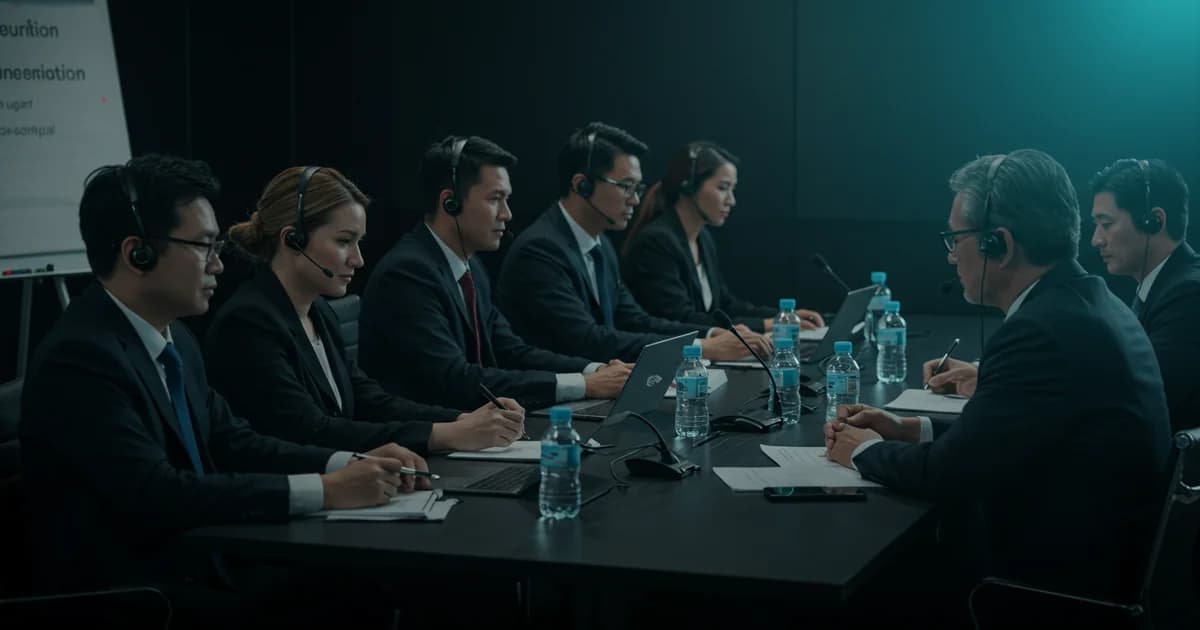
Language Access as a Pillar of DEI: Building an Inclusive Corporate Event Strategy
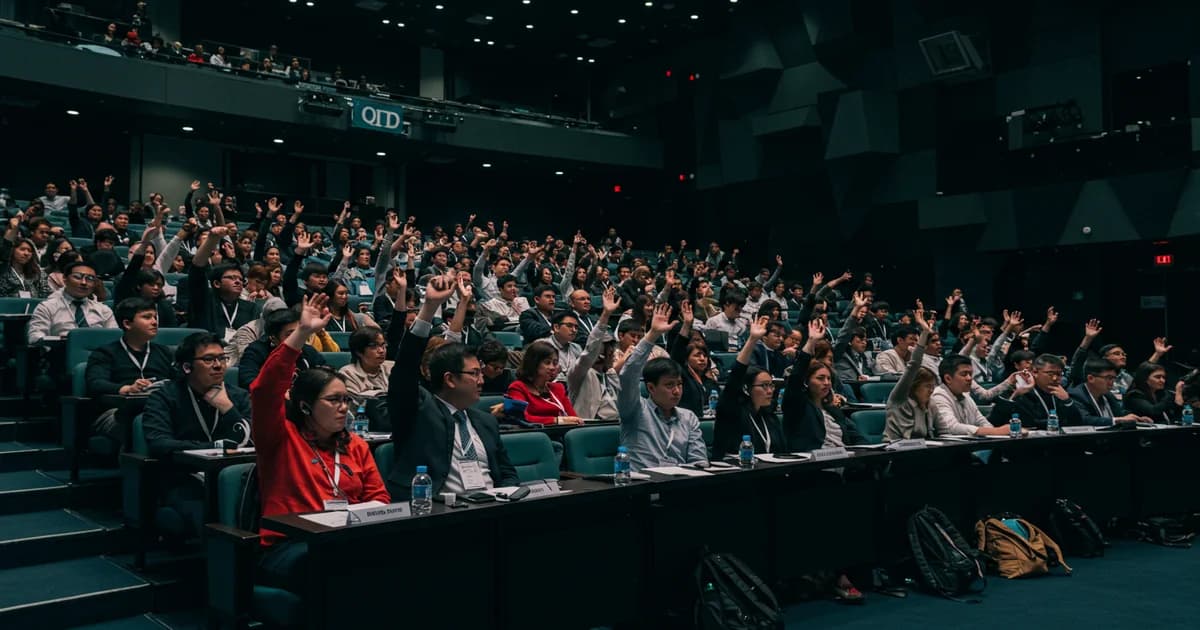
Engage Everyone: A Practical Guide to Managing Multilingual Q&A Sessions
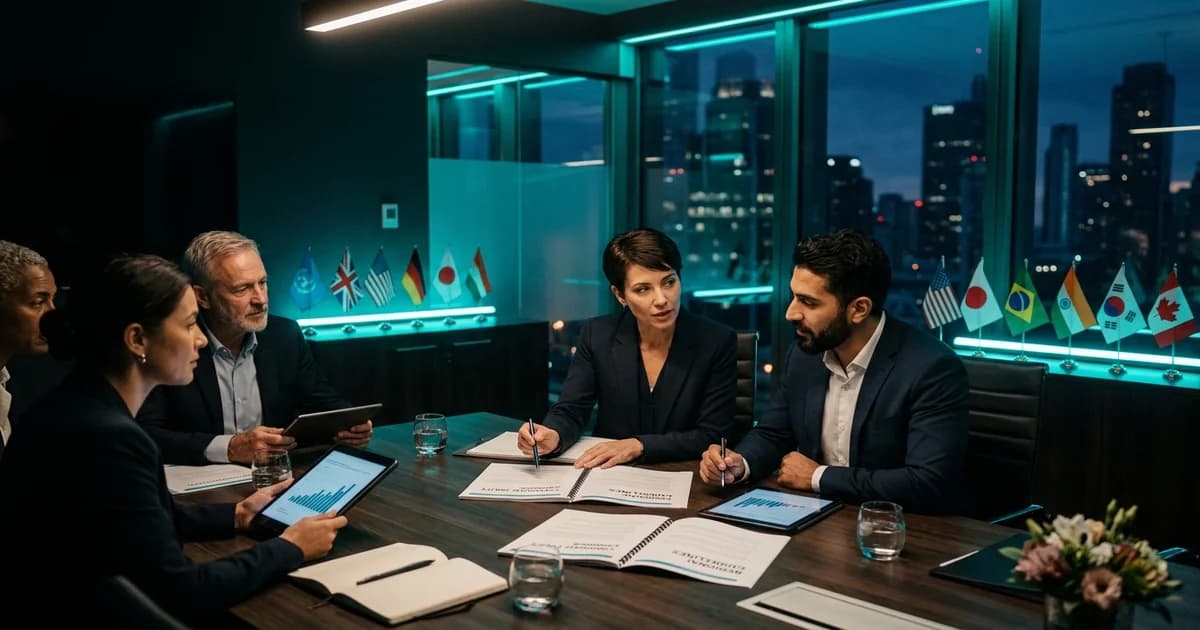
Developing a Corporate Language Access Policy: A Framework for Global Companies