

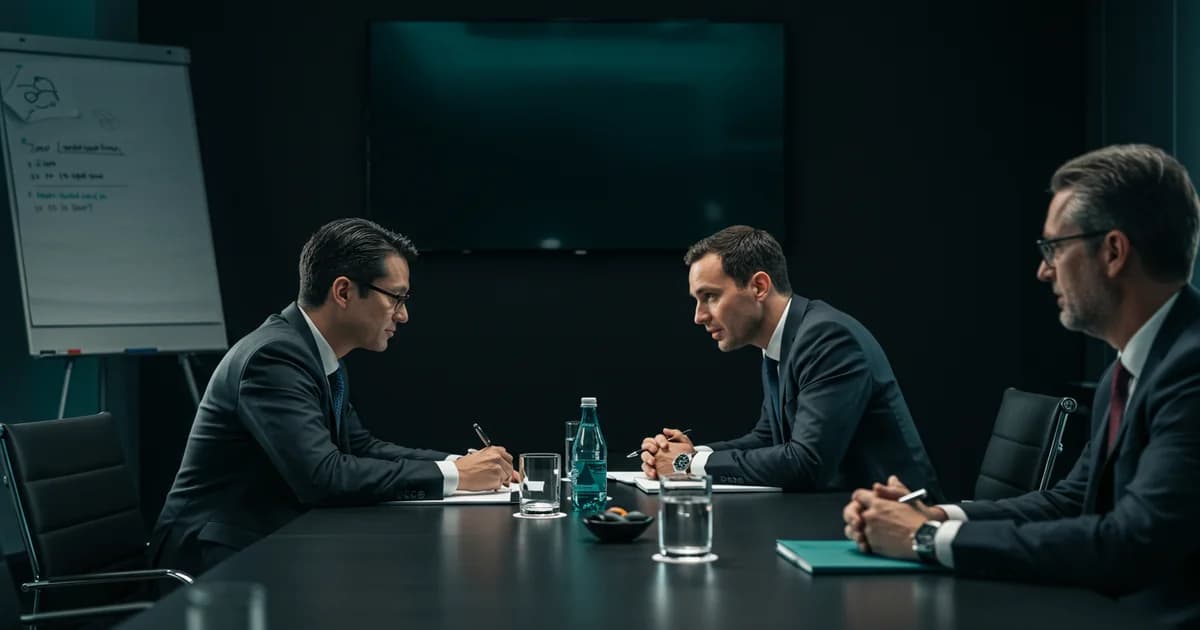
You’re hosting a high-stakes bilateral meeting. Most of your team speaks English, but a key delegate from a partner firm—just one or two people—does not. The conversation needs to flow naturally. You can't have the stop-start rhythm of a consecutive interpreter, but setting up a full soundproof booth for simultaneous interpretation feels like overkill. So, what do you do?
This is the exact scenario where whispered interpretation, or chuchotage, shines. It’s a discreet, effective, and surprisingly simple method for bridging language gaps in small, intimate settings. But like any specialized tool, you need to know when—and how—to use it properly.
This guide breaks down everything you need to know about whispered interpretation for your next small meeting or corporate event.
Chuchotage Explained: The Art of Whispering
Chuchotage is the French word for "whispering." In the context of language services, it's a form of simultaneous interpretation where an interpreter sits or stands directly next to a small number of listeners (typically just one or two) and whispers the translation in real-time as the main speaker talks.
Unlike booth-based simultaneous interpretation, there's no complex hardware. The interpreter relies on their voice, proximity, and intense concentration to deliver the message without disrupting the flow of the meeting for everyone else. Think of it as a private, real-time audio track for your international guests.
The interpreter listens to the source language and simultaneously renders it into the target language in a soft voice. This requires incredible mental dexterity—the ability to listen, process, translate, and speak all at once, while actively blocking out the sound of their own voice and other ambient noise. It's a demanding task that requires a highly skilled professional.
When is Whispered Interpretation the Right Choice?
Chuchotage is a niche solution, perfect for specific situations but not ideal for every event. It's the right choice when:
- Only a Few People Need It: The golden rule of chuchotage is its small scale. It's designed for a maximum of two, or at most three, listeners. Any more than that, and the interpreter has to raise their voice, which can distract other attendees.
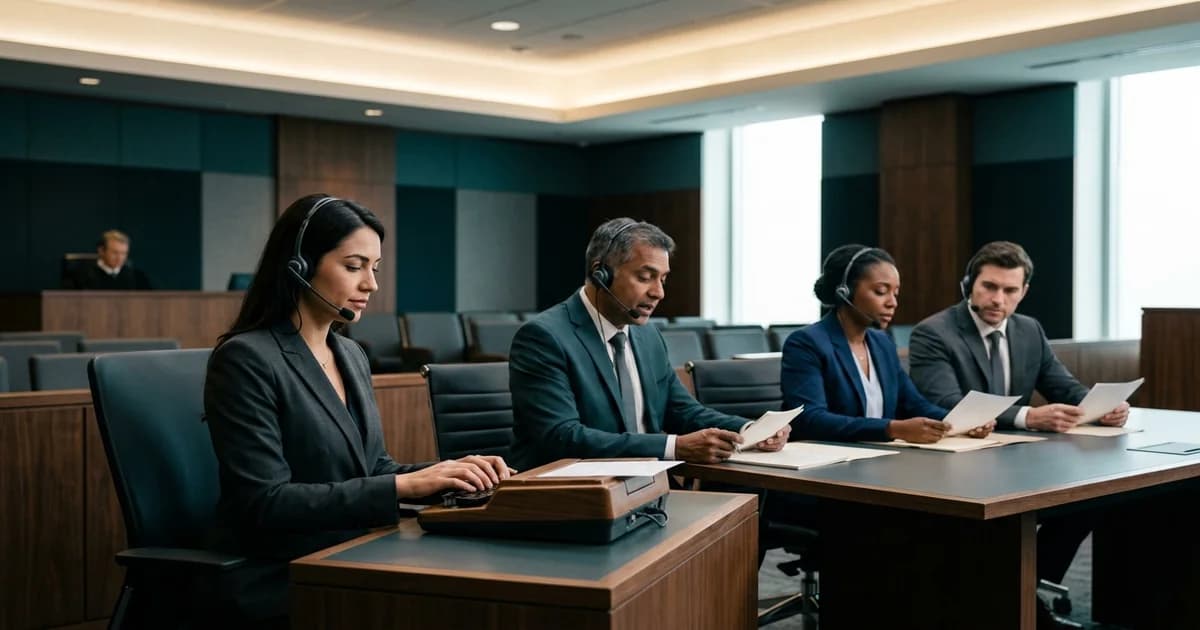
- The Setting is Intimate and Quiet: It's best suited for small business meetings, diplomatic negotiations, court proceedings, site visits, or one-on-one interviews. A quiet environment is crucial because the interpreter and listeners are competing with ambient noise.
- You Need to Save Time: Because it's a form of simultaneous interpretation, it keeps the conversation moving. There are no awkward pauses, which you get with consecutive interpretation, making the interaction feel more natural and efficient.
- Discretion is Key: For confidential negotiations or high-level bilateral meetings, chuchotage provides a private channel of communication without broadcasting the translation to the entire room.
Imagine a factory tour where a visiting executive needs to understand the plant manager's explanations, or a small corporate dinner where one board member speaks a different language. These are perfect applications for whispered interpretation.
The Pros and Cons vs. Using Portable Tech or a Full RSI Setup
Deciding between traditional chuchotage and a technology-based solution depends on your budget, environment, and scale. Here’s a quick breakdown:
Traditional Whispered Interpretation (Chuchotage)
- Pros:
* No Hardware Required: In its purest form, it's just a human interpreter. This makes it cost-effective and easy to set up with zero technical footprint.
* Intimate & Personal: The close proximity fosters a strong connection between the interpreter and the listener, allowing the interpreter to pick up on non-verbal cues and nuances.
* Time-Efficient: Keeps the meeting flowing without the stop-start of consecutive interpretation.
- Cons:
* Highly Limited Scale: It's only effective for one or two people.
* Susceptible to Noise: Background noise can make it very difficult for the listener to hear the whispered translation and for the interpreter to hear the speaker.
* Potentially Distracting: The whispering, even when soft, can be distracting to other participants in a very quiet room.
* Mentally Taxing: It's an incredibly demanding task for the interpreter, which is why it's often best for shorter meetings.
Portable Interpretation Tech (Tour-Guide Systems)
Sometimes called a "bidule," this involves a lightweight radio transmitter and microphone for the interpreter and headsets for the listeners.
- Pros:
* Overcomes Noise: The direct audio feed to the headset cuts through ambient noise, ensuring clarity.
* Slightly More Scale: Can be used for a slightly larger group (e.g., 4-20 people) than pure chuchotage.
* Less Intrusive: The interpreter doesn't need to be physically tethered to the listeners, giving both more personal space.
- Cons:
* Requires Equipment: Adds a layer of technology to manage (batteries, distribution, collection).
* Potential for Interference: Wireless signals can sometimes experience interference.
Full Remote Simultaneous Interpretation (RSI) Platforms
This is where browser-based solutions like InterpretWise come in. Attendees listen to interpretation on their own smartphones via a simple QR code scan—no app download needed.
- Pros:
* Infinitely Scalable: Works for 20 attendees or 5,000+. You're not limited by hardware.
* No Specialized Hardware: Attendees use their own phones and earbuds. This eliminates hardware rental, shipping, and management costs.
* Superior Audio Quality: Integrates directly with your event's AV system, giving interpreters crystal-clear audio.
* Total Flexibility: Supports hybrid events seamlessly, allowing remote and in-person attendees to access interpretation. It also supports 20+ languages simultaneously.
- Cons:
* Requires Internet Access: Attendees need a stable internet connection on their devices.
* Initial Setup: While fast (often just 15-30 minutes), it requires integration with your meeting platform (like Zoom or Teams) or event AV.
How to Set Up a Room for Effective Whispered Interpretation
If you opt for traditional chuchotage, setting up the room correctly is critical for success. It’s not just about putting people in chairs; it’s about creating an optimal acoustic environment.
- Prioritize Proximity and Line of Sight: The interpreter must sit directly next to or slightly behind the person(s) needing interpretation. Crucially, they also need a clear, unobstructed view of the main speaker to read body language and visual aids.
- Minimize Background Noise: Choose a room away from high-traffic areas. Hard surfaces like glass, tile, and bare walls reflect sound, creating echoes that make it harder to hear. Rooms with carpets, soft furnishings, and acoustic panels are far better. If you can't change the room, even small things like closing a door can make a big difference.
- Strategic Seating Arrangement: Seat the interpreter and their listeners where they can easily hear the primary speaker without being in the direct path of other conversations. For a roundtable meeting, place them in a spot where the interpreter isn't constantly swiveling to find the current speaker.
- Inform Other Participants: Briefly explain to the other attendees that whispered interpretation is taking place. This prevents them from misinterpreting the quiet talking as rude chatter and encourages them to keep ambient noise to a minimum.
- Consider a Portable System in Noisy Environments: If the meeting is in a factory, an exhibition hall, or another noisy space, traditional chuchotage will fail. In this case, a simple portable "tour guide" system with a microphone for the interpreter and headphones for the listeners is the best solution to ensure clarity.
Modern Alternatives: Can Technology Replace Traditional Chuchotage?
For decades, chuchotage was the only option for small group interpretation. But what about today? Can technology offer a better way?
The global language services market is projected to grow from $61.48 billion in 2025 to $67.52 billion in 2026, a sign of booming demand. Much of this growth is driven by new technologies making language access more scalable and efficient.
While AI-powered translation is growing rapidly, with 68% of conference organizers using it in 2025, human interpreters remain essential for high-stakes communication where nuance and accuracy are critical. This is where hybrid platforms come in.
For the modern event organizer, a platform like InterpretWise offers a powerful alternative to the limitations of traditional chuchotage. Imagine your small bilateral meeting. Instead of an interpreter leaning in and whispering, your guests could simply scan a QR code, open a link in their browser, and listen to a professional human interpreter in crystal-clear audio through their own earbuds.
It’s just as discreet but far more effective.
- The audio is perfect, regardless of room noise.
- It scales instantly if another person needs to listen in.
- It works flawlessly for hybrid meetings, integrating with Zoom, Teams, and other platforms.
- It includes live captions and subtitles, enhancing accessibility even further.
This approach combines the irreplaceable skill of a human interpreter with the power and flexibility of modern, browser-based technology. For corporate teams, NGOs, and governments focused on efficiency and flawless execution, it's a natural evolution from the classic whisper.
Ready to see how a modern interpretation platform can elevate your small meetings? Get a quote to explore a solution tailored to your needs.
FAQs: About Whispered Interpretation
PAA: What is the difference between whispered and simultaneous interpretation?
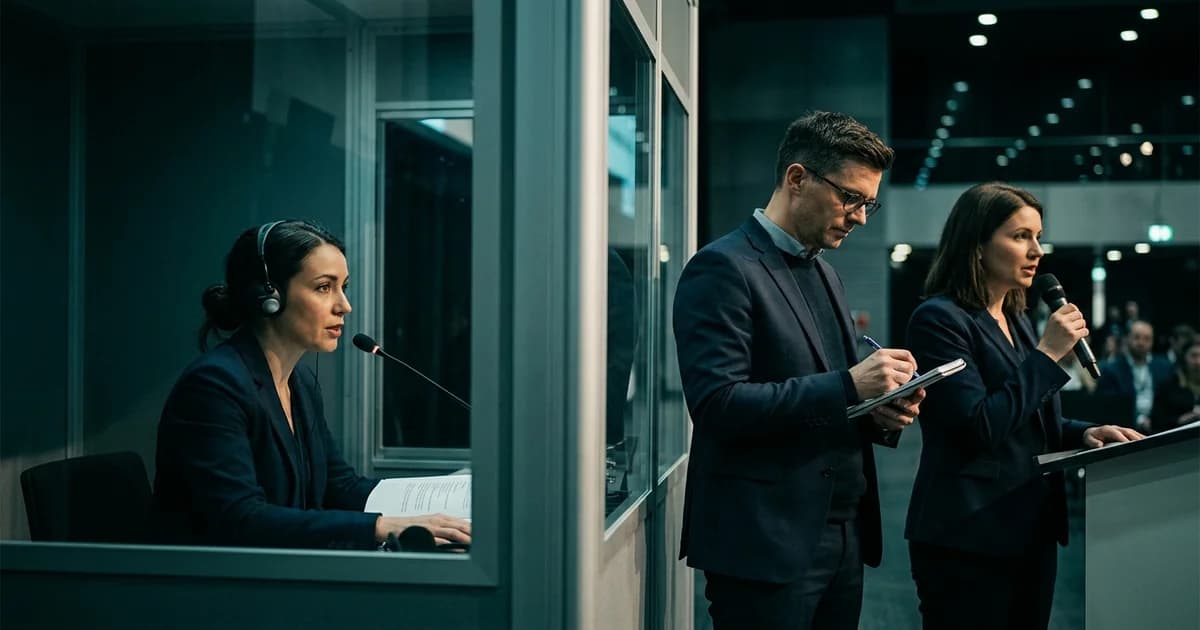
Whispered interpretation (chuchotage) is a form of simultaneous interpretation. The main difference is the delivery method. In traditional simultaneous interpretation, the interpreter works from a soundproof booth and their voice is transmitted to the audience via headsets. In whispered interpretation, the interpreter sits next to the listener and whispers directly to them without any equipment.
PAA: When would you use whispered interpretation?
You'd use whispered interpretation in small, quiet settings where only one or two people need translation. It’s ideal for bilateral business meetings, diplomatic visits, courtrooms, or any situation where the stop-start pace of consecutive interpretation would be disruptive and a full booth setup is unnecessary.
PAA: How many people can a whispered interpreter serve?
A whispered interpreter can effectively serve a maximum of two or three people. Any more than this forces the interpreter to speak louder, which can disturb other attendees and compromise the quality of the interpretation.
PAA: Does whispered interpretation require equipment?
In its purest form, no. The interpreter simply whispers directly to the listener. However, in noisy environments or for slightly larger groups (more than two), a portable system with a microphone and headsets (often called a "tour guide system") is highly recommended to ensure clarity.
Related Articles
Conference Interpretation Cost: A Complete 2026 Pricing Breakdown
What Is Remote Simultaneous Interpretation (RSI)? The 2026 Guide
The True Cost of Interpretation Booths (And How to Cut It by 80%)

How to Choose an Interpretation Service: 10 Critical Questions
Simultaneous vs. Consecutive Interpretation: Which to Choose for Your Event?
Interpretation for Legal Proceedings: Depositions, Hearings & Arbitrations