

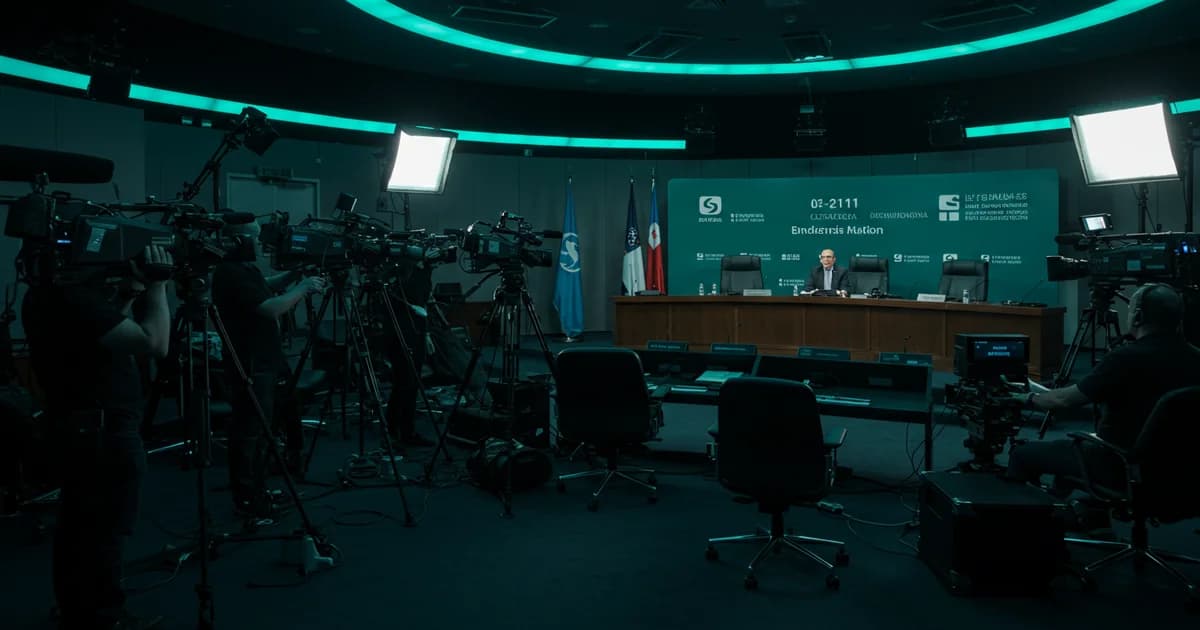
You’ve got a major announcement. A new product, a crucial policy update, or a sensitive corporate statement. Your message is polished, your speakers are prepped, and the media is waiting. But in today’s interconnected world, your audience isn’t just in one room or one country. They’re everywhere. If your announcement is only in English, you're not having a global press conference; you're just talking to one part of the world.
Getting your message to land accurately and instantly across multiple languages is what separates a local headline from a global conversation. And that’s where professional interpretation comes in. This isn’t just about translation; it's about conveying nuance, authority, and confidence, no matter the language. This checklist will walk you through the key steps to ensure your next multilingual media briefing is a success, from initial planning to post-event follow-up.
Why Your Message Needs to Land Perfectly, in Every Language, Instantly
At a press conference, every word matters. Journalists are looking for quotes, context, and clarity. A misunderstanding or a poorly translated phrase can lead to inaccurate reporting, damaging your brand's image. The outcomes of press conferences have a direct impact on a company's public perception.
Simultaneous interpretation ensures your message is heard and understood in real-time. Unlike consecutive interpretation where the speaker must pause, simultaneous delivery keeps the momentum going, which is critical in a fast-paced media setting. This allows international journalists to follow every detail, gesture, and emotional cue as it happens, just like their English-speaking counterparts.
And while some might ask about automated captions, they simply can’t compete with a professional human interpreter. Live captions are often delayed, inaccurate, and miss the cultural nuances and tone that are vital for true understanding. A 2025 study highlighted that sign language interpreting, for example, captures nuance and context that captions often miss. For high-stakes communication, you need the reliability and precision that only a human expert can provide.
Pre-Conference: Briefing Interpreters with Embargoed Information
Your interpreters are your most important communication partners. Don’t treat them like vendors; treat them like part of your core team. The success of the interpretation depends heavily on their preparation.
The Interpreter Briefing Packet
Weeks before the event, provide your interpretation team with a comprehensive briefing packet. The more context they have, the more accurate they will be. This is especially critical for a global product launch or any announcement involving technical terms. Include:
- The full press release and presentation slides: Even under a strict Non-Disclosure Agreement (NDA), this is the single most important asset you can provide.
- A glossary of key terms: Include product names, acronyms, and any specific industry jargon. This prevents on-the-fly guesswork.
- Speaker bios and roles: Knowing who is speaking and their position helps interpreters convey the right level of authority.
- A list of all participant names and titles: Providing this in both the source and target languages is a huge help for the interpreter.
Data security is a major focus for events in 2026 and beyond. When sharing this sensitive, embargoed information, you must use a secure platform. Any professional interpretation service you work with should be GDPR compliant, especially if you're targeting the EU market. This means having clear Data Processing Agreements (DPAs) in place and using end-to-end encryption for all file transfers.
The Setup: Hybrid, In-Person, and Virtual Press Conference Logistics
The days of press conferences being purely in-person events are fading. The hybrid model is now the norm, combining a physical stage with a global virtual audience. This shift requires a flexible and robust technical setup that works for everyone, everywhere.
The Modern Interpretation Platform
Forget clunky hardware and expensive on-site booths. Modern platforms like InterpretWise are 100% browser-based, meaning no one needs to download an app or rent special equipment. Here’s what the ideal setup looks like:
- 100% Browser-Based: Speakers, interpreters, and attendees can all join from their preferred device.
- Simple Attendee Access: Attendees simply scan a QR code to access the audio channels for 20+ languages right on their own smartphones.
- Platform Integration: The solution should integrate directly with the streaming platforms you already use, like Zoom, Teams, Google Meet, and YouTube Live.
- Live Captions Included: While not a replacement for interpretation, live-translated subtitles provide an extra layer of accessibility.
This setup can be deployed in under 30 minutes. For a fully virtual press conference, interpreters work remotely, listening to the main feed and delivering their interpretation on a separate audio channel that attendees select. For a hybrid event, the on-site audio is fed into the platform, and both in-person and remote attendees can listen in their chosen language. This approach significantly reduces equipment costs and logistical complexity.
Managing the Q&A from International Journalists
The Q&A session is often the most revealing part of a press conference—and the most challenging to manage in a multilingual setting. Questions can come quickly and from journalists joining from all over the world.
Here’s a checklist for a smooth multilingual Q&A:
- Establish a Clear Process: Have the moderator explain how the Q&A will work. Will journalists raise their hands virtually? Submit questions via a chat box?
- Train Your Moderator: The moderator is the conductor of this orchestra. They should be trained to repeat questions clearly before the speaker answers. This ensures both the speaker and the interpreters have heard the question correctly.
- Rely on Hybrid Interpretation: Your interpretation team should have experience in both consecutive (for the question) and simultaneous (for the answer) modes. A skilled interpreter can seamlessly switch between the two.
- Use a Platform with a Hand-off Feature: The best interpretation platforms allow the "floor" audio to be passed to the journalist who is asking the question, then back to the speaker. This ensures everyone hears the question in the original language before it's interpreted, providing full context.
Managing a live, multilingual Q&A session is where a professional team and the right technology truly prove their worth. It keeps the event flowing and ensures no journalist feels left out.
Post-Conference: Distributing Multilingual Assets and Recordings
Your press conference doesn't end when the live stream stops. The goal is to maximize media coverage, and that means making it easy for journalists to write their stories.
Immediately after the event, you should distribute a package of multilingual assets. This can dramatically increase the quality and quantity of international coverage you receive. Your asset package should include:
- The full press release, professionally translated into all the languages you offered during the event.
- A recording of the press conference with separate audio tracks for each language. This allows journalists to easily grab quotes in their native language.
- An automated transcript of the event, also available in multiple languages. While AI-powered transcription is useful here, remember it's not a substitute for the nuanced work of the human interpreters during the live event.
- High-resolution photos and key visuals from the presentation.
By providing these ready-to-use assets, you empower journalists to publish their stories faster and more accurately, ensuring your message resonates globally long after the event is over.
Ready to take your next press conference global? InterpretWise provides a seamless, secure, and professional interpretation platform that scales to any audience size. Get a Quote today and see how easy it can be to speak to the world.
FAQs: Global Press Event Interpretation
PAA: How does interpretation work for a press conference?
For a press conference, simultaneous interpretation is most common. Interpreters, either on-site or remote, listen to the speaker through a dedicated audio feed and interpret the message in real-time. Attendees select their desired language channel through a browser-based platform on their smartphone or computer to hear the live interpretation.
PAA: How much does it cost to hire an interpreter for a press event?
The cost can vary widely based on the language combination, event duration, and interpreter expertise. Daily rates for a professional conference interpreter can range from $600 to over $1,200. Remote simultaneous interpretation (RSI) platforms can reduce overall costs by eliminating the need for travel and expensive on-site equipment like soundproof booths.
PAA: Why do press conferences use human interpreters instead of just captions?
Human interpreters provide a level of accuracy, cultural nuance, and real-time speed that automated captions cannot match. Live captions are often delayed, contain errors, and fail to convey the speaker's tone or intent, which is critical for journalists. For high-stakes events like a PR event interpretation, professional interpreters are essential for clear and accurate communication.
PAA: What is the difference between simultaneous and consecutive interpretation?
Simultaneous interpretation happens in real-time; the interpreter speaks at the same time as the source-language speaker without pauses. This is ideal for press conferences. Consecutive interpretation is when the speaker talks for a segment, pauses, and then the interpreter renders that segment in the target language. This is often used for Q&A sessions or smaller meetings.
Related Articles
Live Subtitles for Events: The Complete Guide (2026)
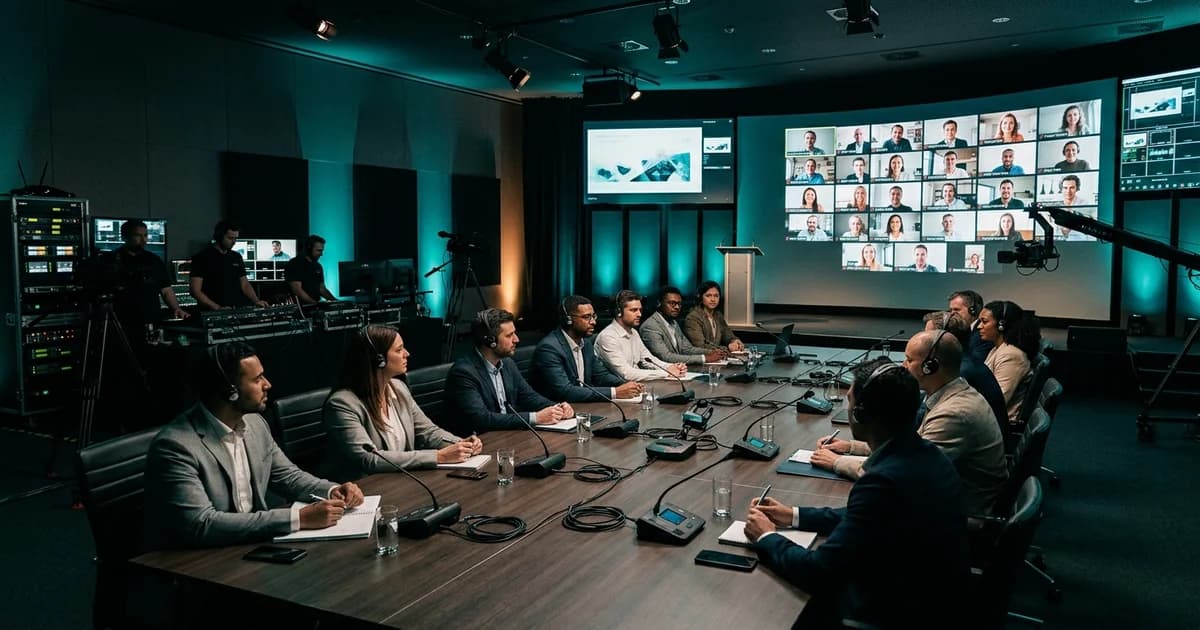
Hybrid Event Interpretation: A Complete Technical & Logistics Guide
What Is Remote Simultaneous Interpretation (RSI)? The 2026 Guide
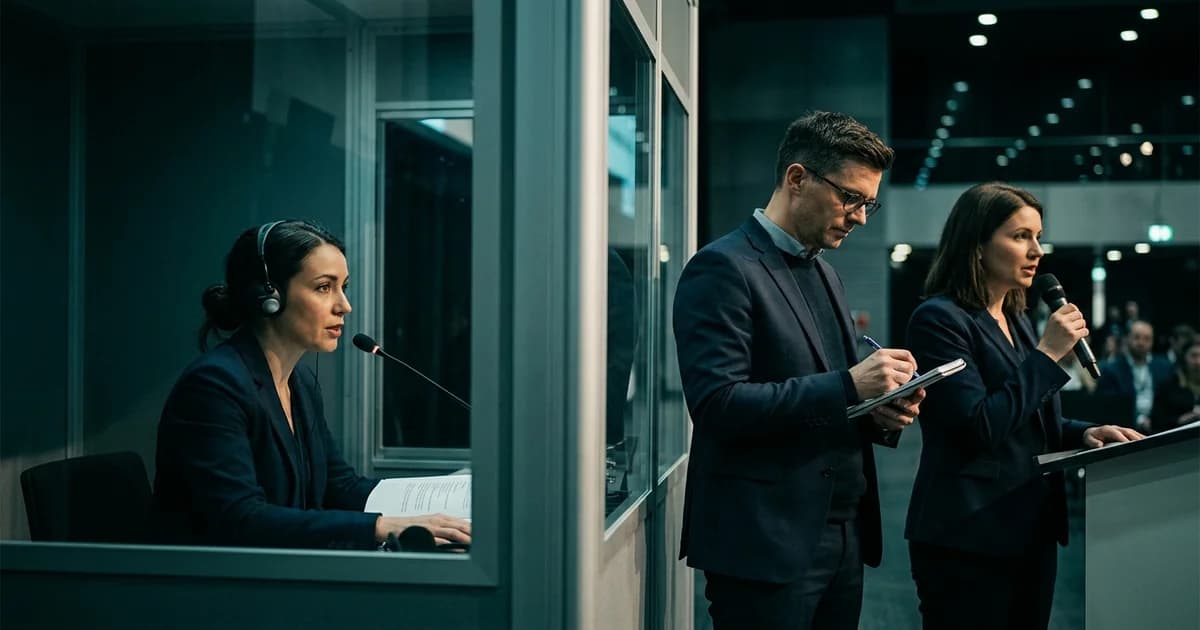
Simultaneous vs. Consecutive Interpretation: Which to Choose for Your Event?
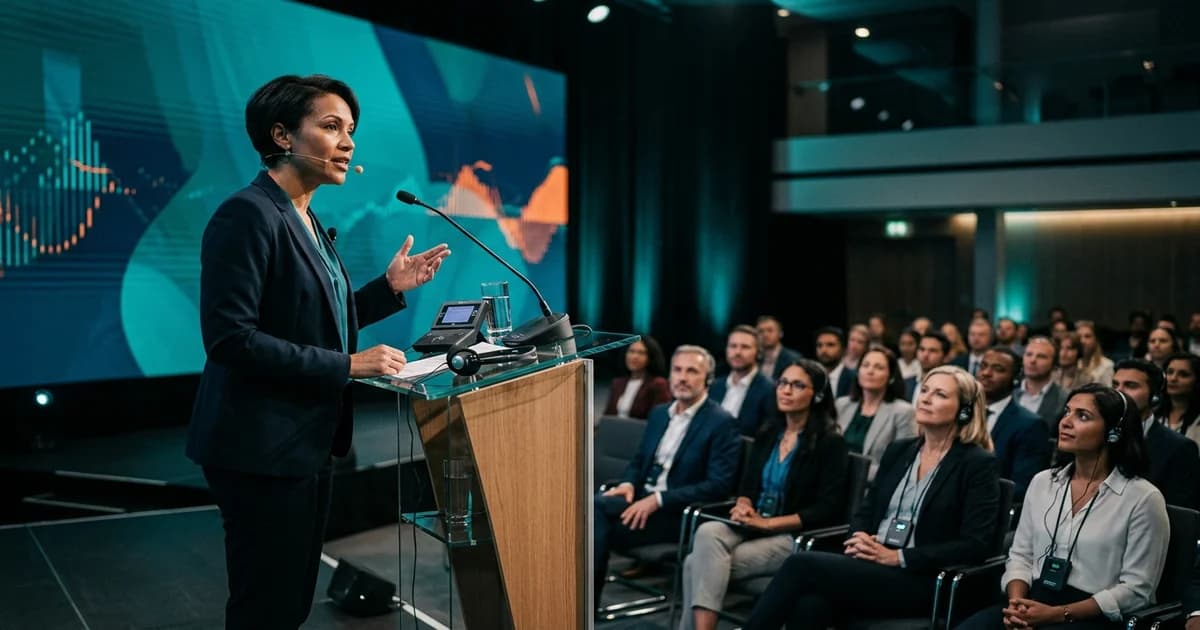
Speaker's Guide: How to Present at a Multilingual Event
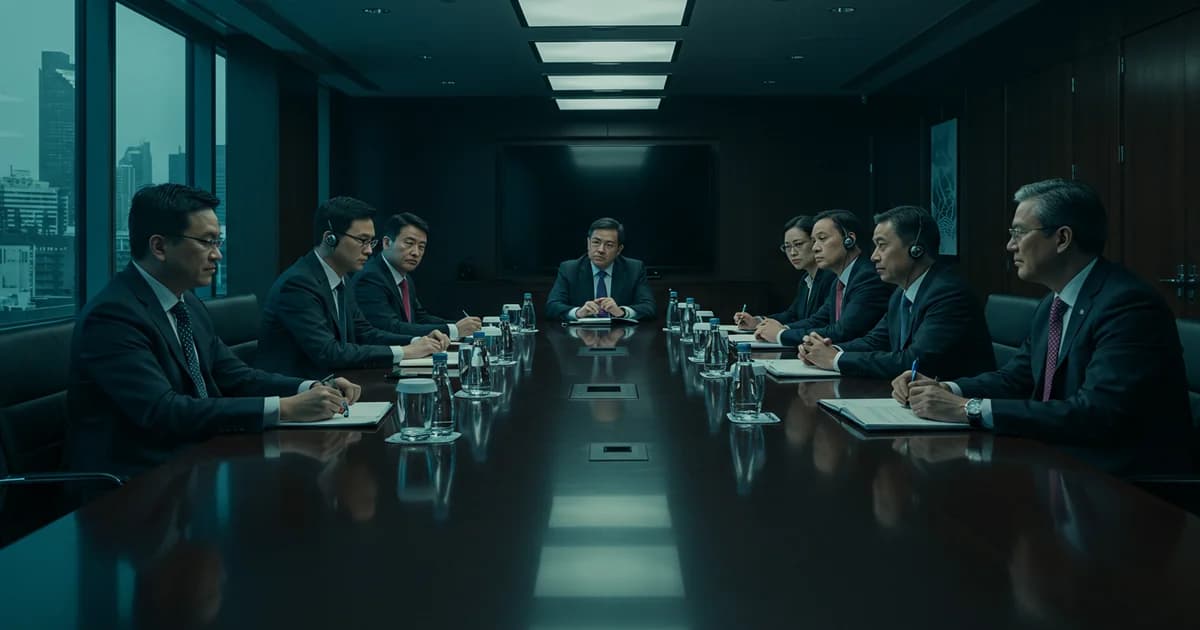
Securing Global Capital: Professional Interpretation for Investor Relations
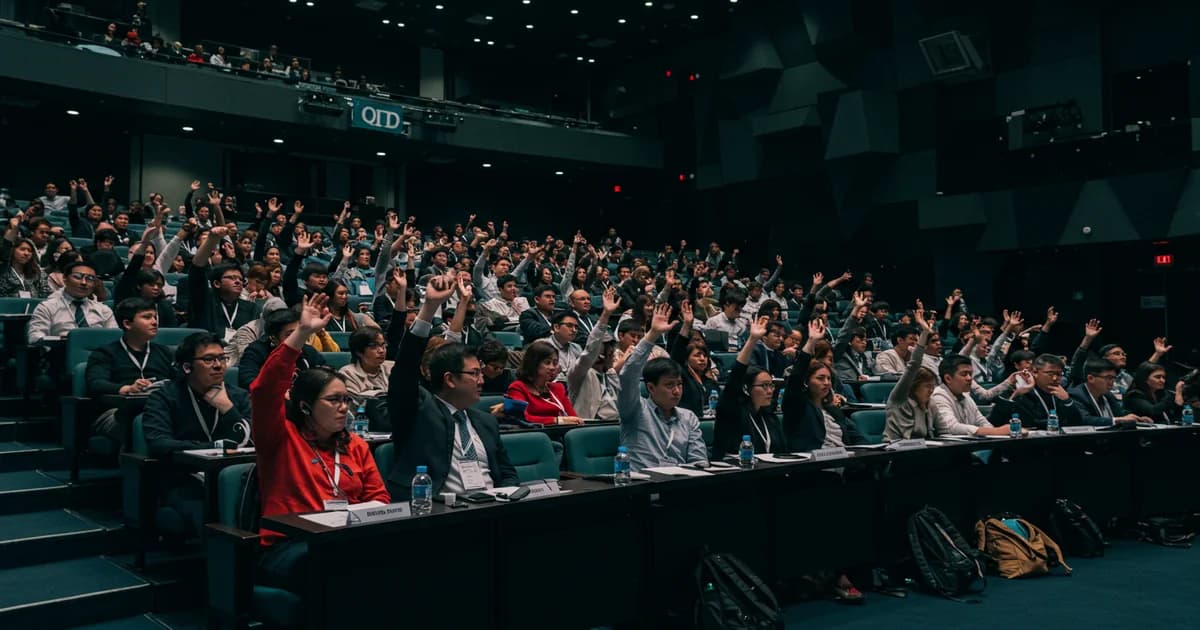
Engage Everyone: A Practical Guide to Managing Multilingual Q&A Sessions