

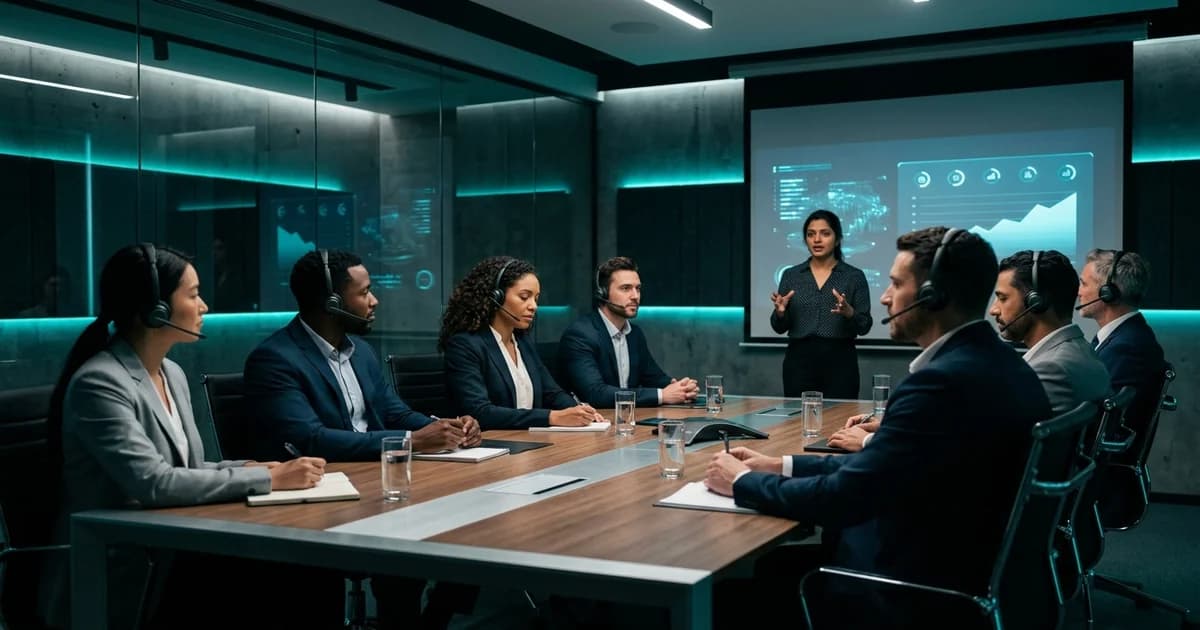
You've built a world-class training program. Your content is sharp, your instructors are engaging, and the material is critical for every employee's success. But as your company expands across borders, a new challenge emerges: language. How do you ensure your teams in Berlin, Tokyo, and Mexico City receive the same high-quality training as your team at headquarters?
Delivering the same slide deck in English to a global audience doesn't work. True comprehension—the kind that drives performance and ensures consistency—requires speaking your employees' language. That’s where simultaneous interpretation for training comes in, turning monologue presentations into truly inclusive, multilingual learning experiences.
The workforce is more global and remote than ever. By 2026, it's expected that 52% of the global workforce will be remote in some capacity. As teams operate across continents, the need for clear, consistent communication has never been more critical. This guide breaks down how to scale your corporate training effectively and create a more connected global team.
Why Localized Training Leads to a More Effective Global Workforce
When employees have to mentally translate complex ideas during a training session, their cognitive load skyrockets. They're so focused on deciphering the words that they miss the nuances, the key takeaways, and the opportunity to engage. This is more than just a language issue; it’s a performance barrier.
Multilingual employee training solves this directly. When people learn in their native language, comprehension and retention shoot up. A press release from March 2026 highlighted that businesses investing in native-language training see higher adoption rates and fewer errors. Think about a complex compliance update or a detailed technical onboarding. Delivering it in the local language isn't just a "nice-to-have"—it's a critical factor for accuracy and safety.
Beyond comprehension, offering training in multiple languages sends a powerful cultural signal. It shows your global teams that you see them, you value them, and you're invested in their success. In competitive labor markets, creating an inclusive culture is a real advantage for retaining top talent.
On-Demand vs. Live Interpretation: Which Fits Your Training Module?
When planning your multilingual training strategy, you’ll encounter two main approaches: on-demand (AI-powered) and live (human-powered) interpretation. The right choice depends entirely on your specific training needs.
AI-Powered Interpretation: Speed and Scale
AI interpretation is perfect for straightforward, large-scale sessions where the primary goal is to convey information clearly. Think company-wide town halls, general policy updates, or pre-recorded training modules.
The benefits are clear:
- Instant Availability: Set up a session in minutes for dozens of languages.
- Scalability: Whether you have 50 attendees or 5,000, the technology handles it effortlessly.
- Cost-Effective: Generally more affordable than sourcing live interpreters for multiple languages.
AI is a powerful tool for broad communication. However, for content that is highly technical, deeply nuanced, or emotionally sensitive, you might need a different touch.
Live Human Interpretation: Nuance and Expertise
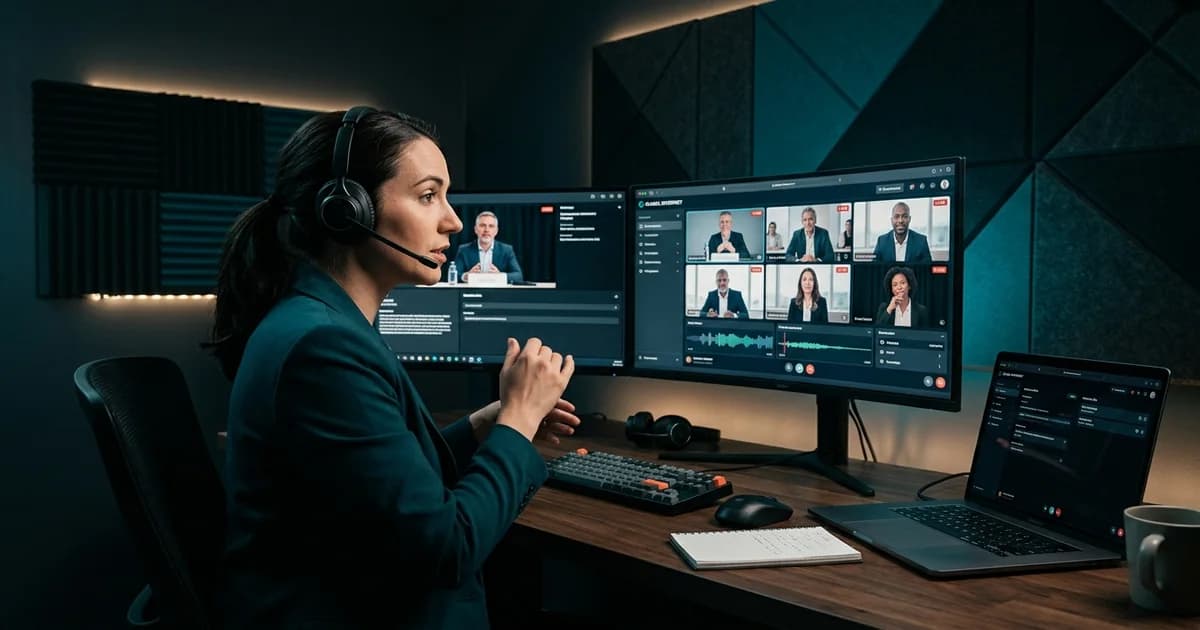
For high-stakes, interactive, or technical training, nothing beats the expertise of a professional human interpreter. These are scenarios where conveying precise meaning, cultural context, and even emotion is paramount. Think leadership coaching, intricate sales negotiations, or detailed software training for engineers.
A human interpreter can:
- Capture sarcasm, humor, and other subtleties that AI might miss.
- Navigate complex, industry-specific terminology with accuracy.
- Adapt in real-time to the flow of a dynamic conversation.
Many modern platforms offer a hybrid model. You can use AI for a large-scale kickoff and then switch to a live human interpreter for a focused, high-touch breakout session. This flexibility allows you to build the perfect language solution for any corporate L&D scenario.
Integrating Interpretation Seamlessly into Your LMS and Virtual Platforms
Your team already uses a suite of tools for learning and collaboration. The last thing you want is another clunky platform that creates friction. The goal is to make multilingual training a natural part of your existing workflow.
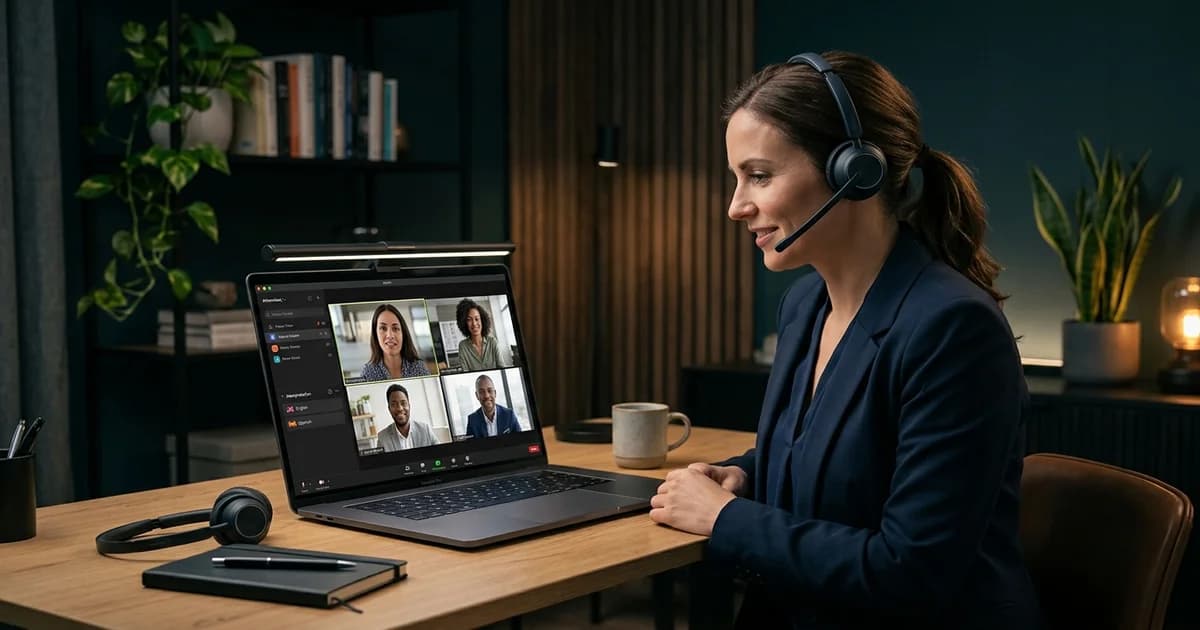
Modern interpretation platforms are designed to integrate directly with the tools you use every day. Whether your training happens on Zoom, Microsoft Teams, Google Meet, or is embedded in your Learning Management System (LMS), adding simultaneous interpretation should be simple.
Imagine this workflow: an employee logs into your LMS to start a mandatory training module. They see the live video session and a simple language selector. With one click, they're listening to a real-time interpretation in their native language. It’s all housed within the familiar LMS environment.
Look for a browser-based interpretation platform. This eliminates the biggest headache for attendees: downloading another app. With a simple QR code or link, attendees can access the audio channels for their language directly from their smartphone's browser. It’s a 100% frictionless experience that gets everyone connected in seconds.
Creating a 'Single Source of Truth': Ensuring Consistent Training Across Languages
One of the biggest risks with decentralized training is message drift. The materials for the team in Germany slowly diverge from the ones in Japan, and soon you have multiple versions of "the truth." This creates inconsistencies in process, compliance, and culture.
Simultaneous interpretation for training helps you maintain a single source of truth. Everyone, everywhere, hears the same core message from the same instructor at the same time—just in their own language.
And it doesn't stop with live audio. Many platforms now include live captions and subtitles as a standard feature. This is a huge benefit for accessibility and comprehension. Captions reinforce learning by allowing attendees to both see and hear the information, which is especially helpful for technical terms or for anyone in a noisy environment. They also create a more inclusive environment for employees who are deaf or hard-of-hearing.
After the session, you have a complete set of translated transcripts. These can be repurposed for training summaries, knowledge base articles, or follow-up materials, ensuring the message stays consistent long after the live event ends.
Case Study: How a Global Tech Firm Scaled Onboarding with Interpretation
A fast-growing SaaS company based in the U.S. was facing a major challenge with its global onboarding solutions. New hires in their European and Asian offices were struggling to keep up with the fast-paced, English-only technical training. The result was a longer ramp-up time, inconsistent product knowledge, and a sense of disconnect among new employees.
They needed a way to deliver consistent, high-quality onboarding to every new hire, regardless of their location or language.
The company implemented a browser-based simultaneous interpretation platform for their virtual onboarding sessions. For their weekly all-hands onboarding kickoff, they used AI interpretation to cover 15 languages simultaneously. This gave everyone a consistent overview of the company's mission and culture.
Then, for the deep-dive technical product training, they brought in live professional interpreters for German, French, Spanish, and Japanese. New hires could ask detailed questions in their native language and get precise answers from the expert trainer via the interpreter. Attendees accessed the interpretation audio simply by scanning a QR code with their phones—no app download required.
The results were immediate.
- Time-to-productivity for new hires decreased by 40%.
- Post-training knowledge assessments showed a 60% improvement in scores among non-native English speakers.
- Employee feedback surveys reported a 95% satisfaction rate with the new multilingual onboarding process.
By centralizing their training and delivering it simultaneously across languages, the company created a more effective, inclusive, and scalable onboarding experience.
Ready to see how you can achieve similar results? See How It Works.
FAQs: Multilingual Corporate Training
PAA: How do you interpret a training session?
Interpreting a training session involves translating the speaker's words into the attendees' language in real time. With a platform like InterpretWise, this is done through a browser-based solution. The presenter speaks normally, and interpreters (either human or AI) provide a live audio feed that attendees can access on their smartphones or laptops. They listen to the translated audio while watching the main presentation.
PAA: What is the best method for multilingual training?
The best method depends on the content and audience. A hybrid approach is often most effective. Use AI-powered simultaneous interpretation for large-scale, informational sessions to reach the widest audience. For highly technical, interactive, or nuanced training, use professional live interpreters to ensure complete accuracy and engagement.
PAA: How can I make my training more accessible to non-native speakers?
The single most effective way is to provide simultaneous interpretation in their native language. Additionally, including live-translated captions and subtitles helps reinforce understanding by providing a visual text version of the audio. Providing session transcripts after the event also allows them to review the material at their own pace.
PAA: How much does simultaneous interpretation for training cost?
The cost varies based on several factors: whether you use AI or human interpreters, the number of languages, and the duration of the session. AI-powered solutions are generally more cost-effective for covering many languages at once. Human interpretation is priced per interpreter, per day, and is best for high-stakes meetings where nuance is critical. Modern platforms offer flexible pricing to fit different training budgets.
Related Articles

AI vs Human Interpretation: Which Is Right for Your Event?
Zoom Interpretation: How to Go Beyond Zoom's Basic Feature
What Is Remote Simultaneous Interpretation (RSI)? The 2026 Guide

Simultaneous vs. Consecutive Interpretation: Which to Choose for Your Event?

How to Calculate the ROI of Your Multilingual Event

From Hire to Hero: How to Structure a Multilingual Employee Onboarding Program

Developing a Corporate Language Access Policy: A Framework for Global Companies