
Every Sunday, millions of people sit in services they cannot fully understand. A Spanish-speaking family joins a predominantly English congregation. A Korean immigrant attends a Catholic mass held in Polish. A refugee community gathers in a church that delivers its sermons in a language they are still learning.
The solution is not to run separate services. The solution is a church translation system — and in 2026, the options available to houses of worship are better, cheaper, and easier to deploy than ever before.
This guide covers everything you need to know: how church translation works, the differences between hardware and software-based systems, real costs, and how modern browser-based platforms like InterpretWise are changing what's possible for congregations of every size.
What Is a Church Translation System?
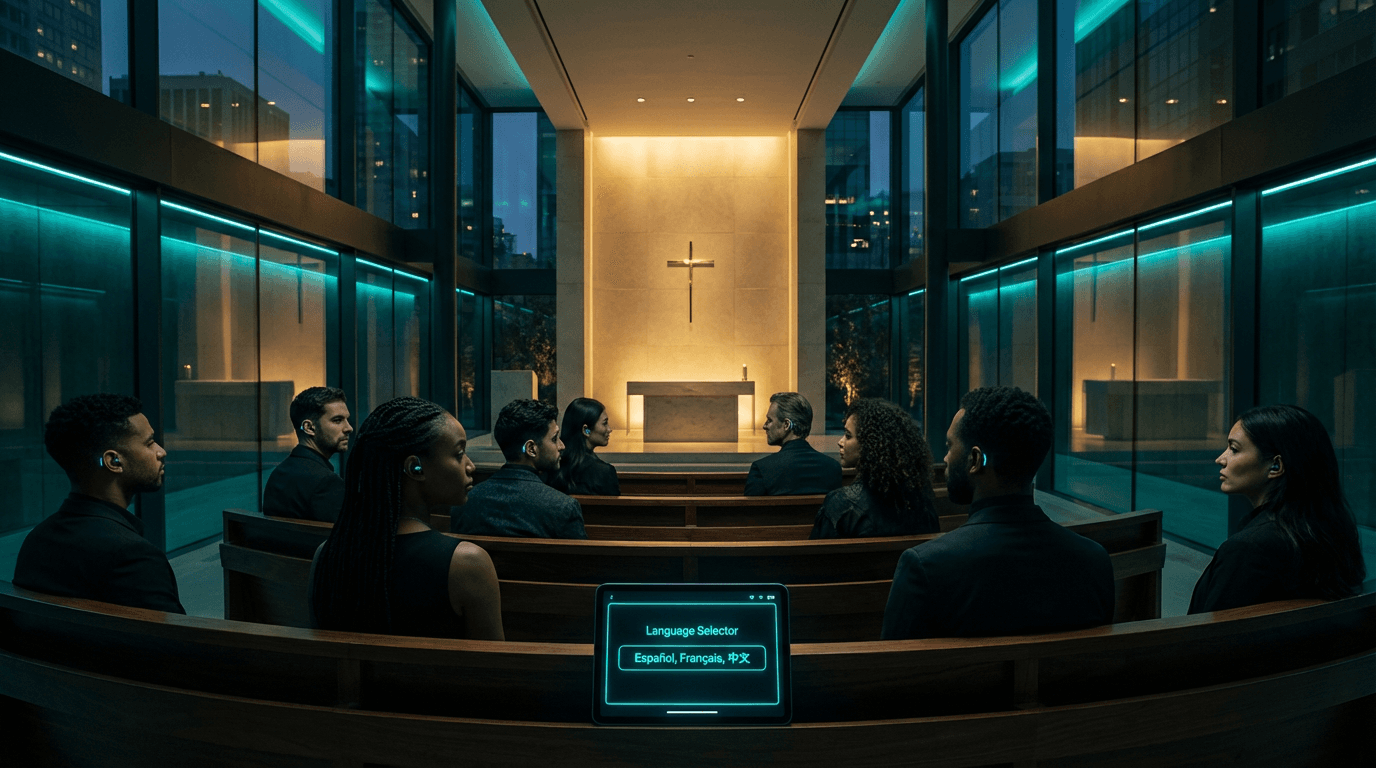
A church translation system delivers real-time audio interpretation to congregation members who speak a different language from the one used in the service. Rather than disrupting the flow of worship, these systems work silently: members wearing small receivers hear the sermon — or readings, prayers, and announcements — in their own language through a discreet earpiece, while the service continues as normal for everyone else.
The technology is not new. Houses of worship have used FM wireless interpretation systems since the 1980s. What has changed dramatically is the range of options, the quality, and the price point.
There are now three main categories:
- Traditional FM/RF wireless hardware — transmitters, receivers, and earpieces
- App-based digital platforms — attendees use their own smartphones
- AI-powered real-time translation — automated or hybrid systems that interpret without a human interpreter
How Does a Church Translation System Work?
The Traditional Hardware Model
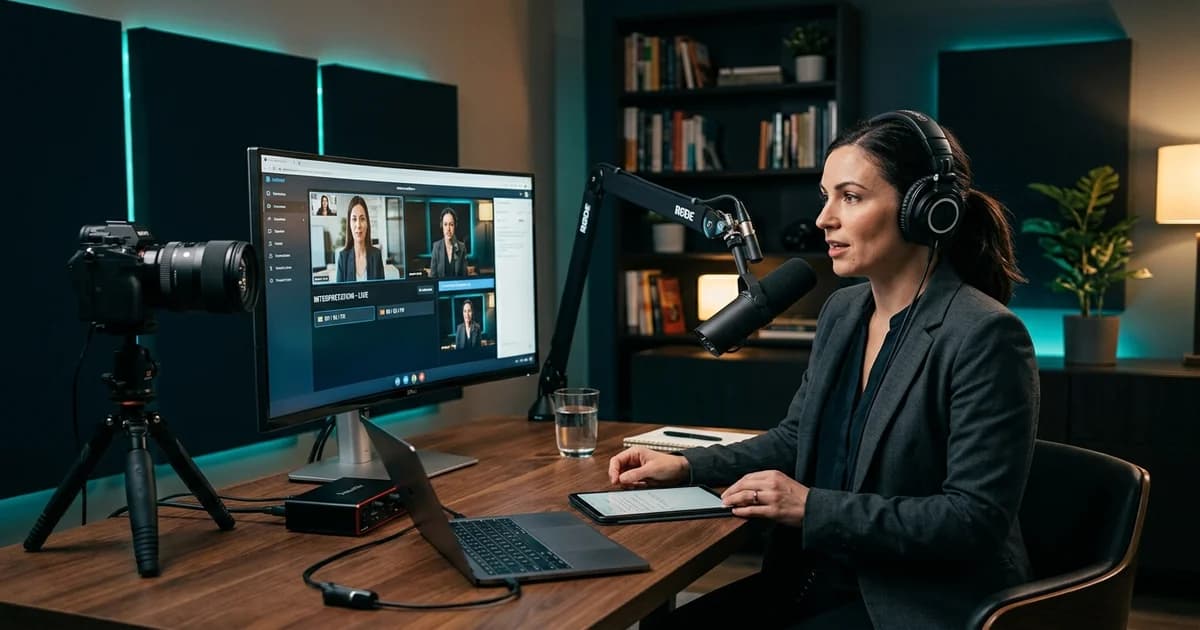
In a traditional setup, a human interpreter sits in a quiet area — a side room, a corner booth, or a designated seat — and listens to the service through headphones connected to the PA system. As the pastor speaks, the interpreter renders the message in the target language in real time.
The interpreter's voice is transmitted wirelessly — typically via FM radio frequencies in the 72–76 MHz assistive listening band as defined by the FCC — to small receivers held or worn by congregation members. Each receiver tunes to a single language channel.
If a church needs three languages — say English, Spanish, and Mandarin — it needs three separate interpreters and three separate transmitter-receiver channels running simultaneously.
The Modern App-Based Model
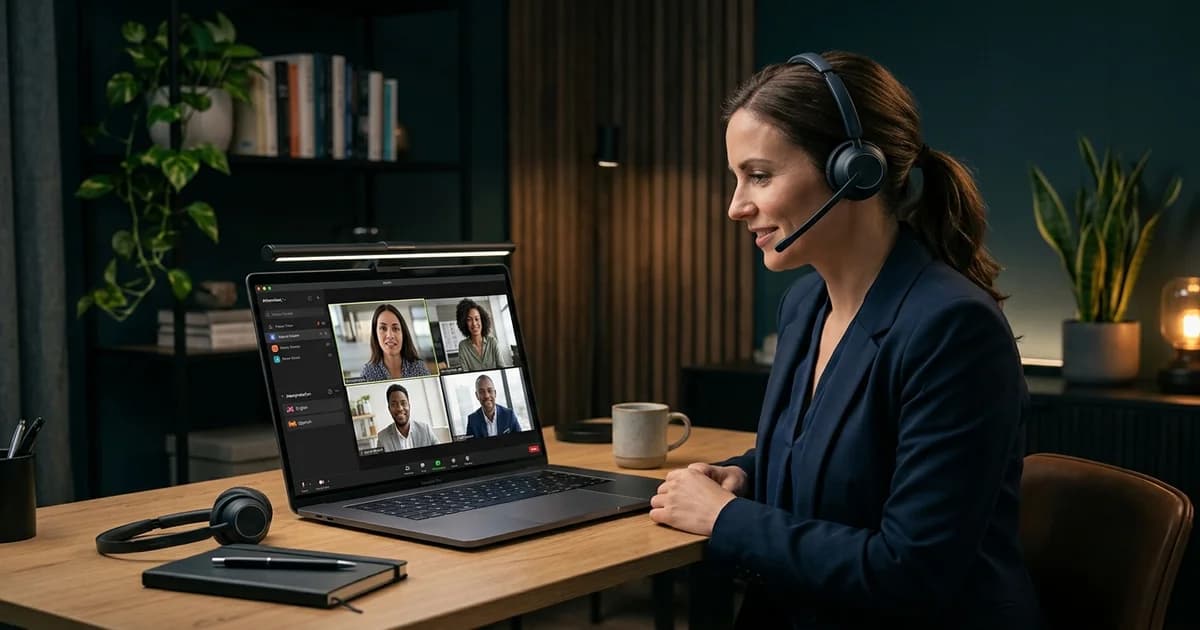
Newer platforms deliver audio over Wi-Fi or mobile data directly to attendees' smartphones. The interpreter speaks into a microphone connected to a laptop or tablet, and the audio streams in near real-time to an app on each listener's phone.
This eliminates the need to purchase, store, charge, and distribute physical receivers — and it means any member of the congregation who has a smartphone can access the service. Visitors don't need to remember to pick up a receiver at the door.
AI-Assisted and Hybrid Systems
In 2025–2026, a growing number of church translation systems are incorporating AI. In these setups, AI handles routine or predictable content (structured liturgy, scripture readings, hymn announcements) while human interpreters are available for sermons, which are more dynamic and nuanced.
Hybrid platforms like InterpretWise allow churches to bring their own bilingual volunteers or professional interpreters and deliver their interpretation to unlimited listeners through a browser — with no hardware required.
Why Multilingual Worship Matters
This is not just a logistical question. It is a pastoral one.
Research from the Pew Research Center on Religion and Public Life consistently shows that language-inclusive worship communities experience stronger retention among immigrant and first-generation members, greater intergenerational engagement, and a broader sense of belonging.
The United States Conference of Catholic Bishops notes that over 40% of American Catholics are Hispanic, and that Spanish-language ministry is a pastoral necessity, not an optional service. Similar patterns exist across Protestant denominations, evangelical churches, and communities of faith worldwide.
A church translation system is not a luxury. For growing, diverse congregations, it is infrastructure.
Hardware vs. Software: Which Is Right for Your Church?
| Feature | Traditional Hardware | App-Based / RSI Platform |
|---|---|---|
| Setup time | 1–3 hours (physical) | 15–30 minutes |
| Languages supported | 1–4 (limited by receivers) | Unlimited |
| Visitor ease of use | Requires receiver handout | Works on any smartphone |
| Internet required | No | Yes (Wi-Fi recommended) |
| Cost (initial) | $500–$5,000+ (hardware) | Monthly subscription |
| Cost (scaling) | High (more hardware) | Low (same subscription) |
| Maintenance | Battery replacement, hardware storage | None |
| Best for | Small, stable language communities | Growing or multilingual congregations |
When to Choose Hardware
If your congregation has a single, stable secondary-language group — say, a Spanish-speaking community within an English-speaking church — and your sanctuary does not have reliable Wi-Fi, a traditional FM system may be the most practical and cost-effective choice.
Entry-level systems from providers such as Williams Sound or Retekess start at around $300–$600 for a five-person setup. Larger systems with 20–50 receivers typically run $1,500–$4,000.
When to Choose a Software Platform
If your congregation is growing, welcomes visitors from multiple language backgrounds, or operates across multiple campuses, a software-based or browser-based platform offers significant advantages. There is no hardware to buy, lose, or charge. New languages can be added immediately. Remote interpreters can deliver interpretation from anywhere in the world.
InterpretWise, for example, works entirely in the browser. An interpreter opens a tab on their laptop, the congregation connects via a link or QR code on their phones, and interpretation begins. There is no app to download, no hardware to set up, and no per-seat licensing cost.
What Does a Church Translation System Cost?
Hardware Costs
| System Size | Typical Cost | Best For |
|---|---|---|
| 5-person starter kit | $300–$600 | Very small groups |
| 20-receiver mid-range | $1,500–$2,500 | Medium congregations |
| 50+ receiver large system | $4,000–$8,000+ | Large sanctuaries |
| Soundproof interpreter booth | $3,000–$12,000 | Professional setup |
Software / Platform Costs
Browser-based platforms typically charge monthly or annually, based on usage:
- Small congregation (under 50 listeners): $30–$80/month
- Medium congregation (50–200 listeners): $80–$200/month
- Large or multi-campus church: custom pricing
The key financial advantage of software platforms is that the cost does not scale with congregation size in the way hardware does. Adding 50 more listeners does not require 50 more receivers.
How to Choose an Interpreter for Your Church
Unless you are using a fully automated AI system, you will need a bilingual volunteer or professional interpreter. For most churches, the interpreter is a trusted bilingual member of the congregation.
When selecting and preparing your interpreter:
- Confirm fluency in both languages, not just conversational ability. Theological vocabulary, scripture references, and liturgical phrases require genuine bilingual competence.
- Prepare them in advance. Share the sermon outline, scripture passages, and any unusual terms the pastor plans to use.
- Provide a quiet space. Even a side room with an audio feed and a reliable microphone dramatically improves interpretation quality.
- Test the audio chain. Run a full technical test before the service — especially for new platforms or equipment.
The International Association of Conference Interpreters (AIIC) recommends all real-time interpreters receive at least brief preparation materials before any live assignment. This applies equally to volunteers.
Integrating Translation Into Your Worship Service
The mechanics of translation should never distract from the experience of worship. Here are practical steps to integrate interpretation seamlessly:
1. Announce the service at the beginning. Let all attendees know that interpretation is available and how to access it (receiver pickup location, QR code, channel number).
2. Brief the worship team. Singers, scripture readers, and anyone speaking should be aware that their words are being interpreted in real time. A slightly slower, clearer delivery pace helps interpreters significantly.
3. Provide materials in the target language where possible. Order of service sheets, scripture references, and song lyrics in the secondary language reduce the interpretation burden and help congregants follow along.
4. Gather feedback. Ask multilingual members whether the interpretation is clear and meeting their needs. Audio quality, vocabulary, and interpreter pace can all be iteratively improved.
Church Translation for Special Services
Beyond weekly worship, translation becomes especially important for:
- Easter and Christmas services, which often draw visitors from wider language backgrounds
- Baptisms and confirmations, where family members may speak different languages
- Funerals and memorial services, where clear communication is particularly important
- Community outreach events, where reaching non-English-speaking neighbours is the explicit goal
- Online services, where your congregation may join from multiple countries
For online services and hybrid events, a platform that integrates with Zoom, YouTube Live, or your church streaming service is essential. InterpretWise integrates directly with Zoom and can deliver interpretation to attendees watching a livestream — without requiring any additional hardware at the venue.
Frequently Asked Questions
What is the best translation system for a small church?
For a small church with a single secondary language and no reliable Wi-Fi, a basic FM wireless system (5–10 receivers) from a provider like Williams Sound or Retekess is the most practical starting point. For churches with Wi-Fi and smartphones in the pews, a browser-based platform like InterpretWise delivers more flexibility at comparable or lower cost.
Do I need a professional interpreter, or can a volunteer do it?
Volunteers with genuine bilingual fluency can perform excellently in a church context, particularly if they are familiar with the congregation's theological vocabulary and are given preparation materials in advance. For high-stakes services (ordinations, major anniversary events), a professional interpreter adds additional assurance.
How many languages can a church translation system support simultaneously?
Traditional FM hardware systems are typically limited by the number of available channels — practically, 2–4 languages. Browser-based platforms like InterpretWise support unlimited simultaneous languages, each with a separate interpreter stream.
Can translation equipment work with a church's existing sound system?
Yes. Most systems take a direct audio feed from the PA or a dedicated microphone. No modifications to the existing sound system are required.
What is the difference between translation and interpretation in a church context?
Translation refers to written text (translating a hymn book or scripture). Interpretation refers to spoken, real-time rendering of speech. Most church translation systems actually deliver spoken interpretation — the term "translation" is used colloquially.
Does InterpretWise work for small congregations?
Yes. InterpretWise is designed to scale from small groups to large conferences. For a church with 20–30 members who need interpretation, the setup is as simple as sharing a link — there is no minimum attendee requirement and no hardware needed.
Is there a free option?
InterpretWise offers a free trial so churches can test the platform with their congregation before committing to a subscription. Hardware starter kits from major suppliers typically do not offer trial periods, though some specialist church AV suppliers offer demo programs.
Related Articles