


In the world of legal proceedings, clarity isn't just a goal; it's the foundation of justice. Every word matters. A misunderstood question, a poorly translated term, or a breach in confidentiality can have irreversible consequences, potentially altering the outcome of a case. This is especially true in multilingual depositions, hearings, and arbitrations, where language barriers add a significant layer of complexity.
You're juggling case strategy, witness preparation, and mountains of evidence. The last thing you need is to worry about whether your non-English speaking client or witness can fully and accurately participate. That's where professional interpretation steps in, but not all solutions are created equal. This article explores the critical nuances of interpretation for legal proceedings and what you must consider—especially when sessions are remote.
Why Legal Interpretation Cannot Afford Errors
The stakes in legal matters are incredibly high. They can involve a person's freedom, a family's future, or a company's financial stability. Unlike casual conversation, legal language is filled with complex jargon, procedural nuances, and terms of art where a literal translation might not capture the correct legal meaning. An inaccurate interpretation can lead to:
- Invalidated Testimonies: If a deposition transcript is riddled with errors due to poor interpretation, it can be challenged and potentially thrown out, wasting time and money.
- Compromised Case Strategy: Misunderstandings can lead you to misjudge a witness's credibility or the strength of a particular line of questioning.
- Violation of Rights: In judicial proceedings, every person has the right to understand and be understood. Inaccurate interpretation can fundamentally deny this right, leading to unfair outcomes.
- Legal and Ethical Consequences: Attorneys have a duty to ensure their clients receive competent representation, and that includes providing qualified interpreters. Failing to do so can open the door to malpractice claims or ethical complaints.
Imagine a witness in a complex patent dispute trying to describe a technical process. A single misinterpreted term could undermine their entire testimony. Or consider a sensitive deposition in a family law case where emotional nuance is just as important as the words themselves. These aren't abstract scenarios; they're real-world situations where precision is everything.
Interpretation for Depositions vs. Courtrooms: Key Differences
While both fall under the umbrella of "legal interpreting," providing interpretation for a deposition is different from doing so in a formal courtroom trial. All court interpreters can perform legal interpreting, but not all legal interpreters are qualified for the intense environment of a courtroom.
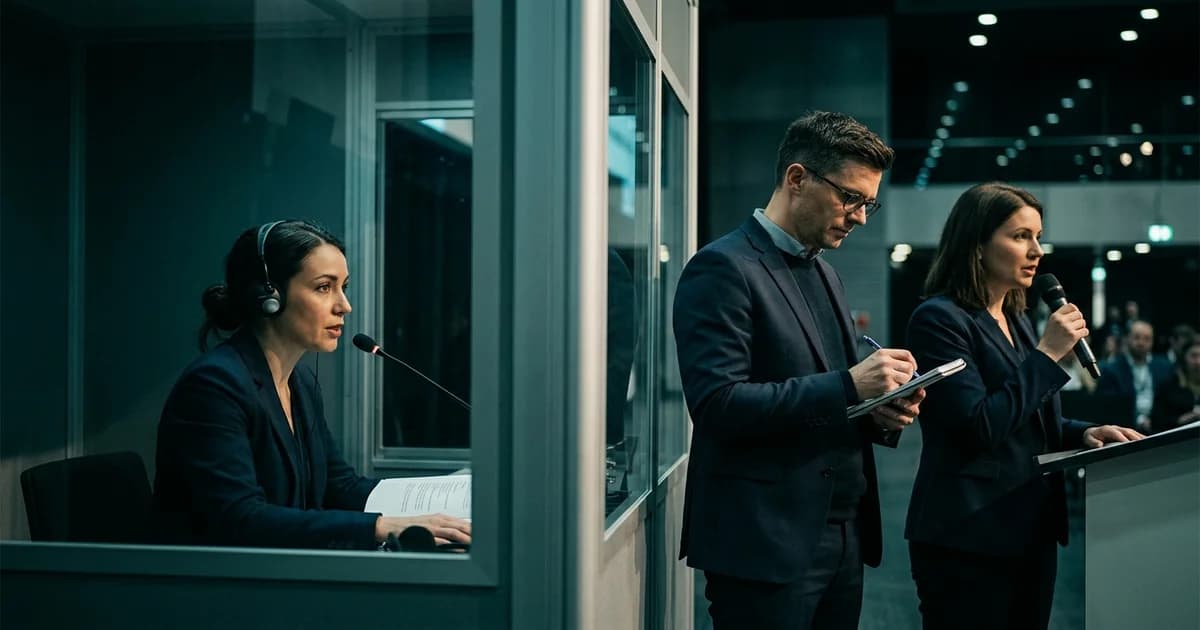
Depositions are fact-finding missions. They occur during the discovery phase and are typically held in a law office or conference room—or increasingly, a virtual one. The setting is less formal than a court, but the need for accuracy is just as high. The primary mode used is consecutive interpretation, where the speaker says a few sentences, pauses, and the interpreter renders it into the target language. This allows for a very precise, deliberate pace suitable for creating a clean record.
Courtroom proceedings, on the other hand, are a different beast. The environment is highly structured and formal. While consecutive interpretation is used for witness testimony on the record, there's also a need for simultaneous interpretation. This is when an interpreter speaks at the same time as the source-language speaker, allowing the limited-English-proficient (LEP) individual to follow the entire proceeding—including attorney arguments and the judge's comments—in real time. This requires an immense amount of skill and concentration, which is why court interpreters often work in teams for proceedings lasting longer than two hours.
Arbitrations and Hearings can be a hybrid of the two. Depending on the rules agreed upon by the parties, they might feel as formal as a trial or as relaxed as a deposition. The key is to match the interpretation mode to the specific needs of the proceeding.
The Role of a Certified Legal Interpreter
So, what makes an interpreter qualified for these high-stakes environments? Simply being bilingual isn't enough. A professional legal interpreter brings a specific and crucial skill set to the table.
A certified legal interpreter is a professional who has passed rigorous testing on their language proficiency, knowledge of legal terminology, and understanding of ethical obligations. Certifying bodies like state courts or the National Association of Judiciary Interpreters and Translators (NAJIT) ensure that these linguists meet the highest standards.
Their responsibilities go far beyond just swapping words between languages. They must:
- Interpret Everything: They are sworn to interpret every single utterance, without adding, omitting, or summarizing anything—even if the statements are rude, redundant, or seem irrelevant.
- Maintain Impartiality: A legal interpreter cannot have a personal stake in the outcome of the case. Their role is to be a neutral communication conduit, not an advisor or participant.
- Uphold Confidentiality: Legal interpreters are bound by a strict code of ethics, similar to attorney-client privilege. All information heard during a proceeding is confidential and cannot be disclosed.
Using a client's family member or a bilingual staff member is a risky proposition. They lack the training in legal terminology and ethical neutrality, which can create conflicts of interest and compromise the integrity of the proceeding.
Technology for Remote Legal Interpretation: Security is Non-Negotiable
As legal work has shifted online, so too has legal interpretation. Remote depositions and virtual hearings are now commonplace, offering convenience and cost savings. But this shift introduces new challenges, particularly around technology and security.
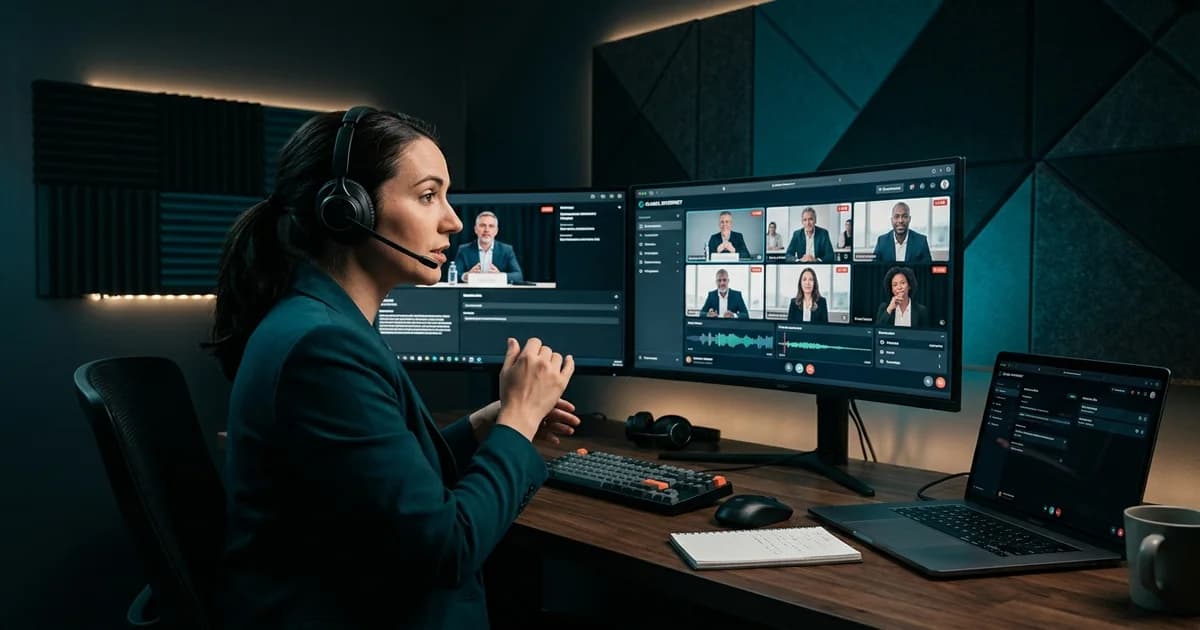
When you're conducting a multilingual legal session remotely, you're not just looking for a standard video conferencing tool. You need a legal RSI platform (Remote Simultaneous Interpretation) built for the demands of the legal profession.
The biggest challenge with remote interpreting is often technical. Poor audio quality, unstable internet connections, and clunky software can severely disrupt communication. An interpreter struggling to hear clearly cannot provide an accurate rendering. This is why a professional-grade platform is essential.
InterpretWise is designed for these exact scenarios. As a 100% browser-based platform, it eliminates the need for any hardware or app downloads. Attendees and limited-English-proficient participants can join with a simple QR code, getting access to simultaneous interpretation in over 20 languages right from their own smartphone or computer. It integrates directly with the tools you already use—like Zoom, Teams, and Google Meet—adding a secure layer for professional interpretation without disrupting your workflow.
Best Practices for Conducting a Remote Multilingual Deposition
Running a smooth remote deposition with an interpreter requires more than just good technology; it demands a clear process.
- Brief the Interpreter: Before the deposition begins, hold a short pre-session with the interpreter. Provide them with the case caption, names of parties, and a list of key terms or acronyms that might come up. This preparation is vital for accuracy.
- Establish Ground Rules: At the start, introduce the interpreter and explain their role to the deponent. Instruct everyone to speak one at a time and to direct their questions and answers to each other, not to the interpreter.
- Ensure Clear Audio: Insist that all participants use a headset with a microphone. This simple step dramatically reduces background noise and ensures the interpreter can hear every word clearly.
- Pace Yourselves: Speak in short, complete sentences and pause naturally to allow the interpreter to work. This is especially important in consecutive interpretation. Avoid speaking too quickly or talking over others.
- Use a Dedicated Interpretation Platform: Don’t try to jury-rig a solution with multiple audio lines. A purpose-built platform like InterpretWise provides dedicated, high-quality audio channels for each language, ensuring a seamless experience for everyone.
Ensuring Confidentiality and Attorney-Client Privilege with RSI
Confidentiality is a cornerstone of the legal profession. When you add third-party linguists and remote technology to the mix, maintaining that confidentiality becomes a primary concern. The attorney-client privilege protects communications made between attorneys and their clients, and this protection extends to the interpreters who facilitate those conversations.
However, that protection is only as strong as the security of your communication channel. Using a non-secure platform for a confidential legal interpretation can be equivalent to having a discussion in a public place, potentially waiving the privilege.
This is where choosing a secure legal interpretation platform is paramount. You need to ensure the service you use treats data security with the seriousness it deserves. For legal teams in Europe, GDPR compliance is not just a feature—it's a legal requirement.
InterpretWise is a GDPR-compliant platform with a focus on the EU market, ensuring that all data is handled according to the strictest privacy standards. With features like encrypted audio and video streams and secure access controls, you can conduct confidential remote depositions and client consultations with confidence, knowing that attorney-client privilege is preserved.
Checklist: Choosing a Platform for Secure Legal Interpretation
When evaluating a remote interpretation platform for depositions, arbitrations, or other legal proceedings, use this checklist to ensure it meets your security and operational needs:
- ✅ Security & Compliance: Is the platform GDPR compliant? Does it offer end-to-end encryption for all audio and video streams? How is data stored and who has access?
- ✅ Browser-Based Access: Does it require participants to download an app or software? A 100% browser-based solution is simpler and more secure, reducing friction for attendees and witnesses.
- ✅ Platform Integration: Does it integrate with your existing video conferencing tools like Zoom, Teams, or Webex? This avoids having to force your entire team onto a new, unfamiliar platform.
- ✅ Audio Quality: Does the platform provide high-quality, dedicated audio channels for interpreters? Test the audio to ensure it is clear and free of lag.
- ✅ Attendee Access: How easy is it for attendees, clients, and witnesses to join and select their language channel? A simple QR code or link is ideal.
- ✅ Scalability: Can the platform handle everything from a one-on-one client meeting to a large arbitration with thousands of attendees?
- ✅ Human & AI Options: Does the platform offer the flexibility to use professional human interpreters for high-stakes matters and AI interpretation for other scenarios?
Navigating the complexities of multilingual legal work doesn't have to be a source of stress. With the right preparation, the right certified legal interpreter, and the right technology, you can ensure every participant can communicate clearly and confidently.
If you're ready to see how a secure, flexible, and easy-to-use RSI platform can transform your legal proceedings, book a demo of InterpretWise today.
Frequently Asked Questions (5 questions)
PAA: What is the difference between a court interpreter and a legal interpreter?
A legal interpreter is a broad term for a linguist who works in legal settings like depositions or client meetings. A court interpreter is a specialized legal interpreter who is certified to work in formal courtroom proceedings, often requiring skills in both simultaneous and consecutive interpretation. All court interpreters are legal interpreters, but not all legal interpreters are qualified for court work.
PAA: What are the challenges of legal interpreting?
The main challenges include mastering complex legal terminology, dealing with high-pressure situations, and maintaining strict impartiality and confidentiality. In remote settings, technical issues like poor audio quality, unstable internet, and the lack of non-verbal cues add another layer of difficulty.
PAA: What are the three types of legal interpretation?
The three main modes are: 1) Consecutive interpretation, where the speaker pauses for the interpreter (common in depositions); 2) Simultaneous interpretation, where the interpreter speaks at the same time as the speaker (used in courts and conferences); and 3) Sight translation, which is the oral rendering of a written document.
PAA: How do you ensure confidentiality in legal interpretation?
Confidentiality is ensured through several layers. Professionally certified interpreters are bound by a strict code of ethics to keep all information private. This is legally reinforced with NDAs. When using technology, you must choose a secure, encrypted platform and ensure unauthorized parties cannot join the session.
PAA: What technology is needed for remote court interpreting?
At a minimum, you need a stable, high-speed internet connection (a wired connection is best), a device with a good camera and microphone, and professional-grade headphones. Critically, you also need a secure video conferencing platform that supports dedicated interpretation channels, often called a Remote Simultaneous Interpretation (RSI) platform.
Related Articles

AI vs Human Interpretation: Which Is Right for Your Event?
What Is Remote Simultaneous Interpretation (RSI)? The 2026 Guide

How to Choose an Interpretation Service: 10 Critical Questions
Simultaneous vs. Consecutive Interpretation: Which to Choose for Your Event?

RSI Platform Security: The IT Checklist for Remote Simultaneous Interpretation
Beyond Spanish: How Language Pair Rarity Impacts Interpretation Costs