
A football manager steps to the microphone after a Champions League final. A journalist in the room asks a question in Portuguese. Another fires one in French. The manager answers in Spanish. The answer reaches broadcasters in 40 countries — in their own languages, simultaneously, without delay.
This is sports interpretation at its highest level. And the principles that make it work at UEFA finals are now accessible to regional tournaments, national sports federations, athlete media days, and broadcast organisations of every size.
This guide covers everything you need to know about sports interpretation services in 2026: how they work, where they are used, what they cost, and how modern remote simultaneous interpretation (RSI) platforms have transformed what is possible.
What Is Sports Interpretation?
Sports interpretation is the real-time oral rendering of speech across language barriers in sports contexts. It covers:
- Press conferences — post-match, pre-match, and mid-season media events involving athletes, coaches, and club officials
- Broadcast interpretation — live commentary and interviews interpreted for international audiences
- Board and governance meetings — national sports federations, Olympic committees, and governing bodies operating across multiple languages
- Athlete support — interpreters embedded with national squads or individual athletes during international competitions
- Fan and spectator services — live captions or interpretation for multilingual stadium audiences
- Arbitration and disciplinary hearings — anti-doping tribunals, transfer disputes, and regulatory proceedings requiring precise legal interpretation
Why Sports Events Need Professional Interpretation
Sport is one of the world's most genuinely multilingual industries. At any major international competition:
- Athletes represent dozens of nationalities and mother tongues
- Governing bodies operate under multilingual charters
- Rights-holding broadcasters serve audiences across dozens of markets
- Accredited media attend from countries spanning every inhabited continent
The Olympic Charter designates French and English as the two official Olympic languages, but specifies that simultaneous interpretation into six languages — French, English, Spanish, Russian, Arabic, and German — must be provided at all IOC sessions. For the Tokyo 2020 Games, over 800 interpreters were mobilised. At Paris 2024, AI-assisted interpretation devices were deployed at scale for the first time.
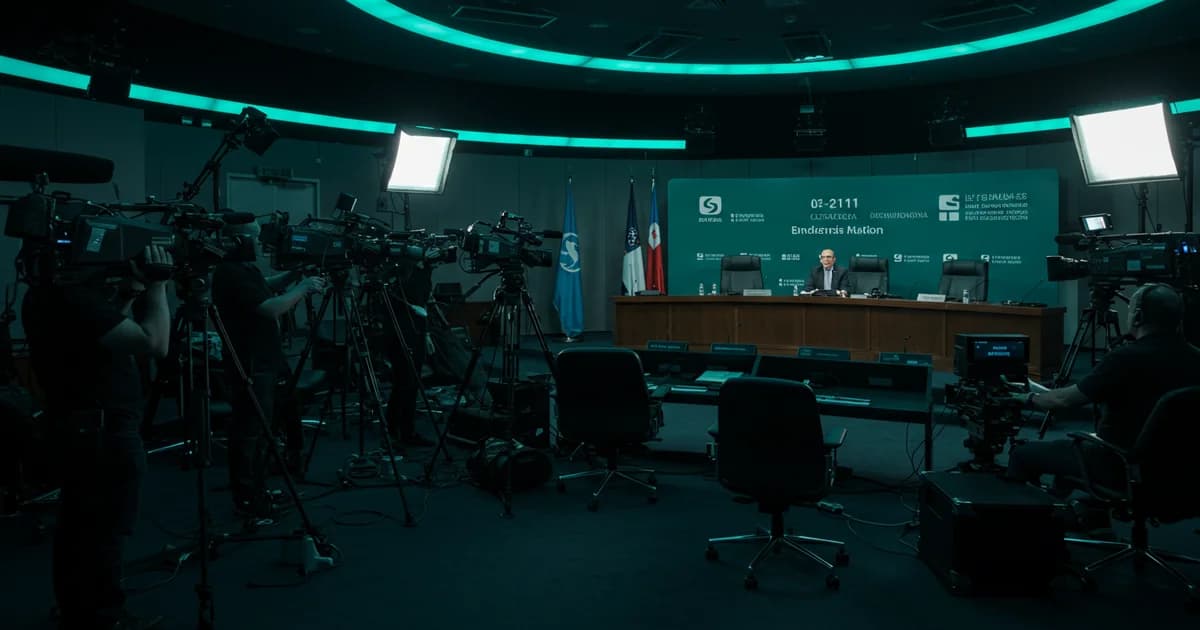
At UEFA, the requirement is equally rigorous. As documented in Interprefy's UEFA case study, UEFA deployed remote simultaneous interpreting at over 100 press conferences during UEFA EURO 2020 alone — covering pre-match, post-match, and mid-tournament media events across multiple venues.
This is not a luxury provision. It is a core operational requirement for any event with international media obligations.
How Sports Simultaneous Interpretation Works
Traditional On-Site Setup
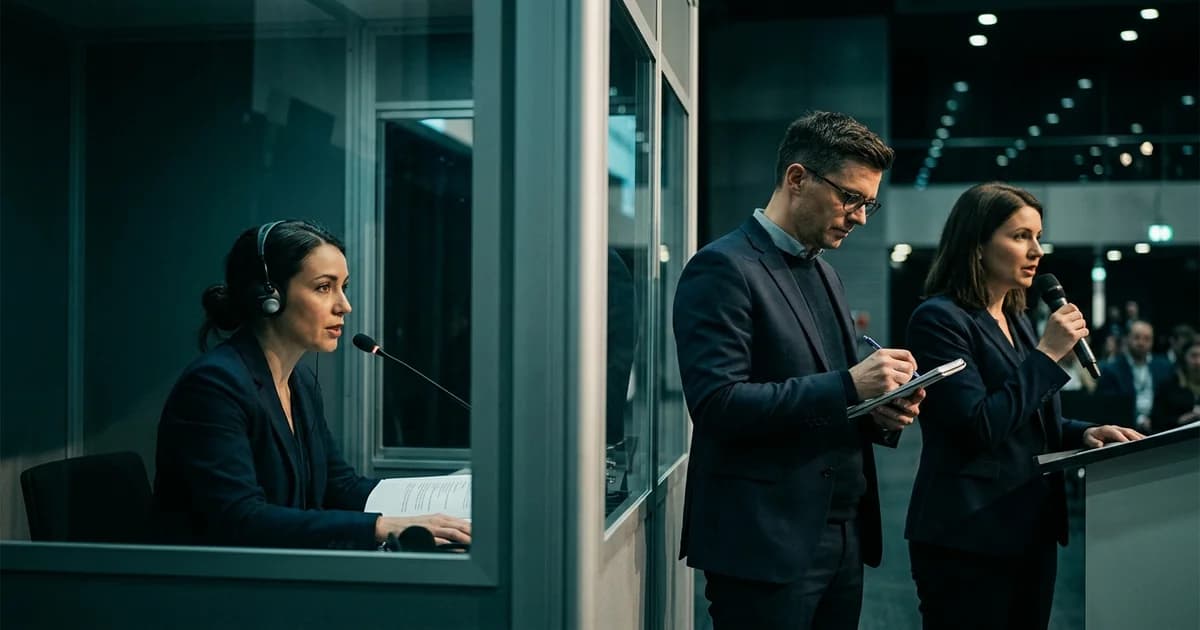
The classic setup for a sports press conference involves:
- Soundproof interpretation booths positioned at the back or side of the press room
- Interpreters working in pairs per language (each interpreter works a 20–30 minute rotation to maintain accuracy under sustained cognitive load)
- Audio distribution — press delegates use headsets tuned to their language channel
- A technician managing the audio routing between the speaker's microphone, the interpreters' consoles, and the delegate headsets
This setup works well for large, well-resourced events where the press room can accommodate booths and the budget covers interpreter travel, accommodation, and equipment rental. For the Champions League final or a Grand Slam press room, it is the appropriate solution.
The AIIC (International Association of Conference Interpreters) sets professional standards for interpreter working conditions, including booth specifications, relay interpretation protocols, and team size requirements.
Remote Simultaneous Interpretation (RSI) for Sports
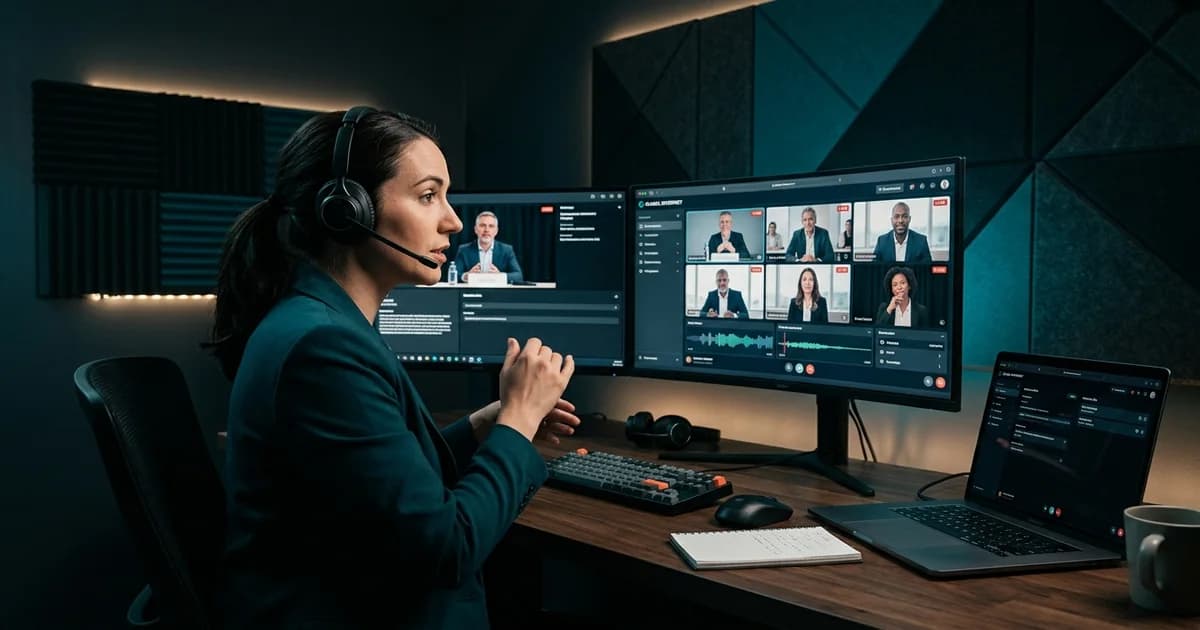
The revolution in sports interpretation over the past five years has been the rise of Remote Simultaneous Interpretation (RSI). Instead of sitting in a physical booth at the venue, interpreters connect from anywhere via a browser-based platform.
How it works for a sports press conference:
- The press conference audio is captured at the venue and streamed to the RSI platform
- Interpreters in remote locations receive the audio in their headsets in real time
- They interpret simultaneously and their audio is delivered back to the platform
- Journalists at the venue select their language on a device or app; journalists joining remotely do the same through the press platform
The logistical advantages are significant. For a regional football federation hosting a manager press conference in three languages, RSI eliminates the need to fly three sets of interpreters to the stadium, rent booths, and set up a full AV system. The interpreters work from home or an office; total setup time is under 30 minutes.
InterpretWise is designed precisely for this use case. A sports organisation can spin up a multilingual press conference in minutes — interpreters join via browser, delegates receive audio via their phones or laptops, and the session is fully managed without specialist AV equipment.
Key Use Cases in Sport
1. Football (Soccer) Press Conferences
Football is the world's most-watched sport and the most interpreter-intensive. Post-match press conferences at international tournaments involve managers and players who may speak Italian, Portuguese, German, French, Spanish, and English in the same session.
Research published via ResearchGate on the FOOTIE corpus — a dedicated study of simultaneously interpreted football press conferences — documents the specific linguistic challenges involved: rapid question-answer exchanges, sports idiom, emotional register shifts, and the need to preserve a speaker's individual voice.
UEFA mandates simultaneous interpreting from the Champions League quarter-finals onwards. This has become the de facto standard for any elite-level European club competition.
2. Olympic Games and Multi-Sport Events
The Olympic Games represent the most complex multilingual interpretation project in sport. Six official languages. Thousands of accredited journalists. Dozens of daily press briefings, athlete interviews, and IOC sessions.
As documented by AbroadLink, Paris 2024 saw the first large-scale deployment of AI-assisted interpretation devices for attending media — reducing the logistical burden while maintaining quality for structured, predictable content types.
For the unstructured, emotionally charged post-event interviews that define Olympic coverage, human interpreters remain essential.
3. National Sports Federations and Governing Bodies
Beyond competitions, sports governing bodies conduct board meetings, general assemblies, anti-doping hearings, and disciplinary proceedings — all of which may require interpretation across multiple languages.
A national athletics federation conducting a hearing involving an athlete, a WADA representative, and legal counsel from three different countries needs interpretation that is accurate, confidential, and procedurally compliant. RSI platforms provide an auditable, secure environment for these proceedings.
4. Broadcasting and Media Rights
International rights holders broadcasting a match or event in their home market often need the source commentary or interview audio interpreted for their announcers. RSI platforms can deliver interpreted audio directly into broadcast workflows, enabling a local broadcaster to receive a foreign-language press conference in their own language with minimal delay.
5. Athlete Management and Squad Support
International clubs and national squads with multilingual rosters increasingly embed interpreters as part of their operational structure. An interpreter working with a Japanese midfielder at a German club, or supporting a Brazilian coaching staff working in England, provides a continuity of communication that goes far beyond one-off events.
Choosing a Sports Interpretation Provider
When evaluating sports interpretation options, consider:
1. Platform reliability. A press conference that drops audio mid-sentence is a significant operational failure. Your RSI provider should offer guaranteed uptime and a dedicated technical support line during the event.
2. Interpreter quality. Sports interpretation is a specialist skill. Interpreters need familiarity with sports vocabulary, tactical terminology, and the conventions of post-match media. Experienced sports interpreters from platforms like LSA (Language Services Associates) maintain dedicated rosters of sports-fluent professionals.
3. Speed of deployment. For day-of or same-day press conferences, your provider's onboarding process matters. InterpretWise allows event organisers to set up a multilingual press session in under 30 minutes, with no AV specialist required.
4. Scale. How many journalists will need interpretation? How many languages? A platform that charges per listener becomes expensive quickly for large accredited press pools. Usage-based or flat-rate models are more predictable for regular users.
5. Recording and archive. Many sports organisations need a record of interpreted press conferences for compliance, broadcast rights, and internal review. Confirm whether your platform records both source and interpreted audio.
What Does Sports Interpretation Cost?
Costs vary significantly based on language combination, event length, and whether interpreters are on-site or remote.
| Service | Approximate Cost |
|---|---|
| Single on-site interpreter (half day) | $400–$800 |
| Full press conference (2 languages, 4 interpreters, 1 hour) | $2,000–$5,000 |
| RSI platform setup (no hardware) | $200–$800/event or monthly subscription |
| Annual RSI subscription (regular press conferences) | $2,000–$8,000/year |
| Full Olympic-scale interpretation project | $500,000–$2,000,000+ |
For sports organisations running regular press conferences (weekly or bi-weekly), an annual subscription to an RSI platform offers substantially better value than event-by-event professional services. InterpretWise pricing is designed to support exactly this model.
AI vs Human Interpretation in Sports
AI interpretation has made rapid advances and is now a serious option for certain sports contexts — particularly live captions, structured announcements, and broadcast subtitling.
However, for live press conferences and athlete interviews, human interpreters remain significantly more accurate for:
- Emotional and tonal nuance (a player's frustration, a manager's dry humour)
- Sports-specific idiom and tactical vocabulary
- Rapid question-and-answer format
- Unpredictable speech patterns under pressure
The practical recommendation for most sports organisations in 2026 is a hybrid approach: AI-powered captions for stadium and broadcast audiences, human interpreters for press room and media obligations. Platforms like InterpretWise support both within the same session.
Frequently Asked Questions
What languages are most commonly needed for sports interpretation?
For European football, Spanish, French, Portuguese, German, Italian, and English are the most common. For global events, Arabic, Mandarin, Japanese, and Russian are frequently added. The right language pair depends entirely on the nationalities represented in your squad, coaching staff, and media pool.
Can an RSI platform handle live sports commentary?
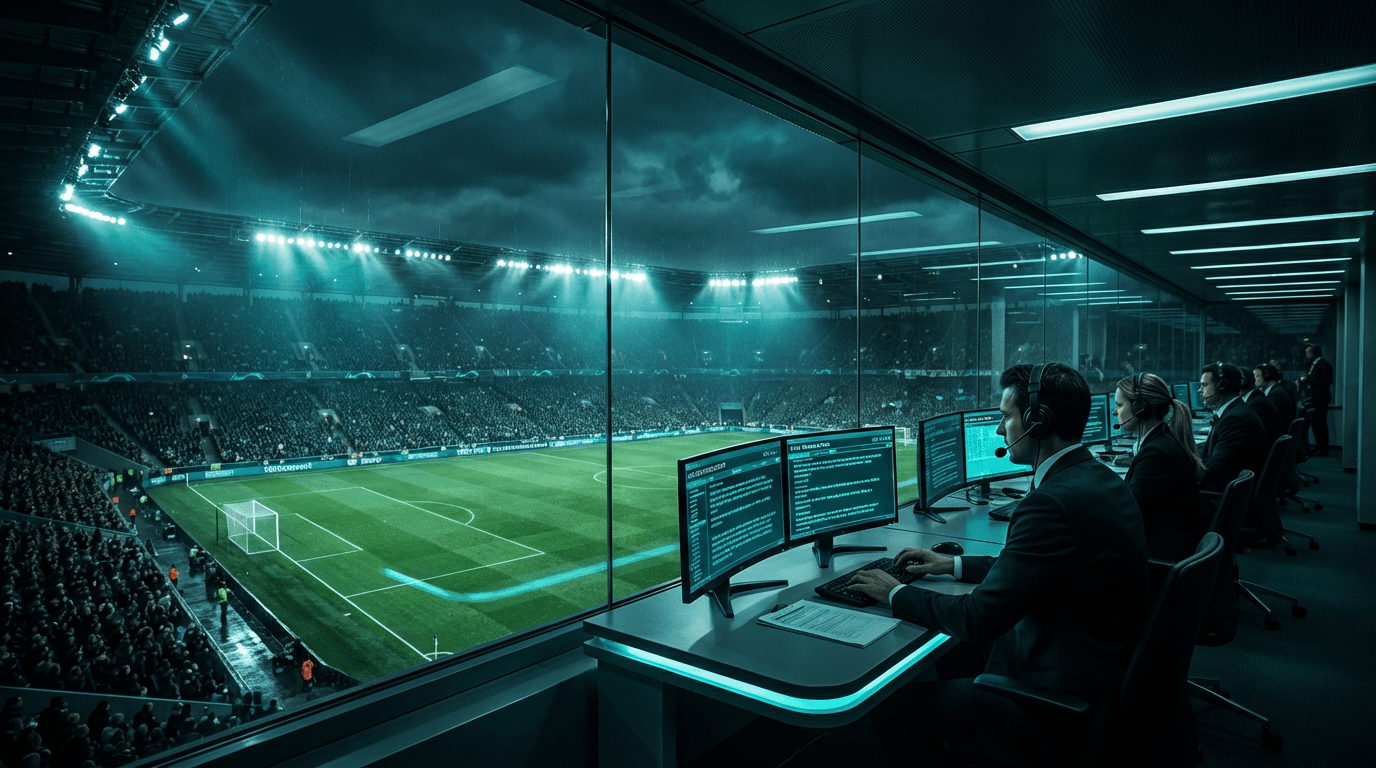
Live sports commentary is a specialist form of interpretation and differs from press conference work — it is faster, more spontaneous, and requires deep knowledge of the sport. While RSI platforms can technically deliver any audio to remote interpreters, live match commentary typically involves dedicated broadcast interpretation teams with specialist training.
How many interpreters do I need for a press conference?
As a general rule, simultaneous interpreters work in pairs per language, rotating every 20–30 minutes. For a one-hour press conference in two languages, you need four interpreters. The AIIC professional standards provide detailed guidance on team size for different assignment types.
Does InterpretWise integrate with broadcast streaming platforms?
Yes. InterpretWise can deliver interpreted audio streams that integrate with Zoom, YouTube Live, and custom broadcast workflows — enabling rights-holding broadcasters to receive a foreign-language press conference in their own language with minimal additional setup.
Is sports interpretation regulated?
There is no single regulatory body for sports interpretation, but major sporting organisations (UEFA, FIFA, IOC) specify interpretation requirements in their media regulations. Interpreters working at elite level typically hold qualifications from bodies such as AIIC or national associations.
What is the difference between a sports interpreter and a sports translator?
A translator works with written texts (match reports, contracts, official correspondence). An interpreter works in real time with spoken language. Both are needed in professional sport, but for press conferences and live events, interpretation is the relevant discipline.
Can InterpretWise handle interpretation for a weekly football press conference?
Yes — this is one of InterpretWise's core use cases. A club or federation can set up a recurring session that interpreters join each week via browser, with no equipment to set up or maintain between sessions.
Related Articles